
How Often Should a Septic Tank Be Pumped?
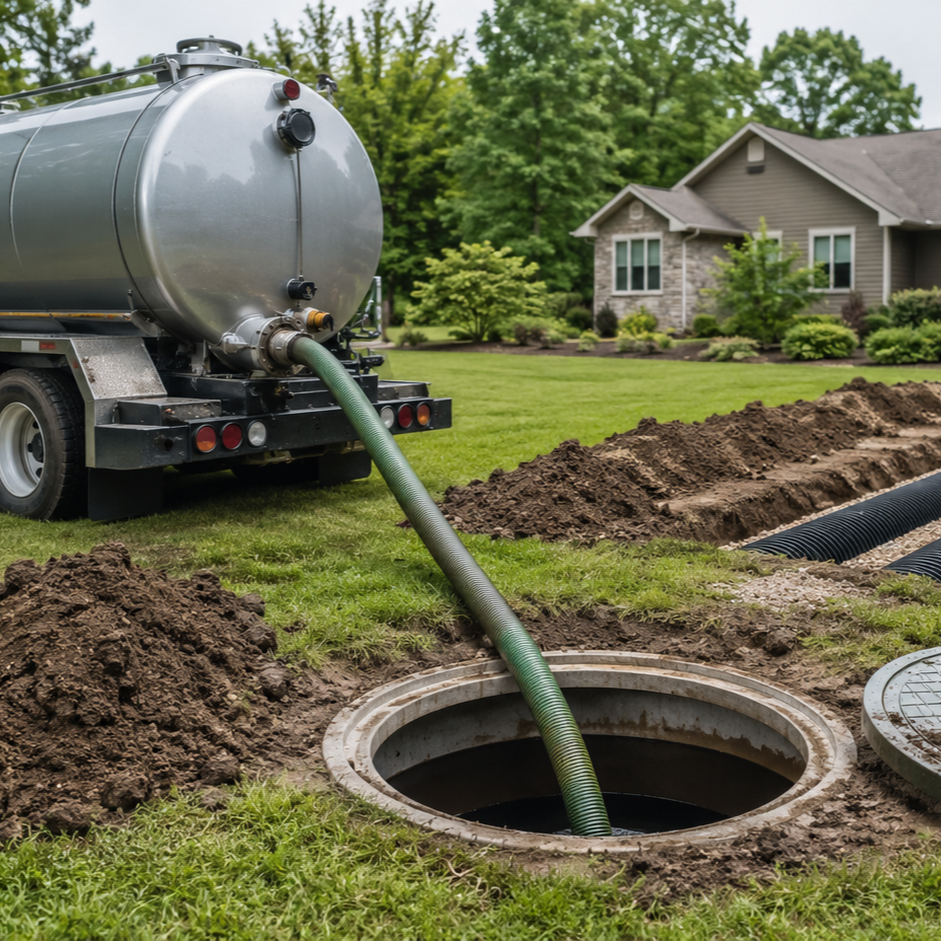
Quick Answer: Most septic tanks should be pumped every 3 to 5 years, though the right interval depends on the tank size, the number of people in the household, and how much water and waste the system handles. Larger households and smaller tanks need pumping more often; smaller households with larger tanks can go longer. Pumping removes the solids (sludge and scum) that accumulate in the tank, which a septic system can't break down completely. Staying on a regular pumping schedule prevents solids from building up to the point where they flow into the drain field, clog it, and cause backups and system failure. Regular pumping is the single most important septic maintenance task.
Your septic system handles the house's wastewater day after day without you thinking about it. The one thing that keeps it working is getting the tank pumped on a regular schedule. Skip that, and you're looking at backups and a repair bill that hurts. So, how often does it need to be done? Every few years is the short answer. The right number for your home depends on a handful of things. Here's how to land on it.
The General Schedule
For most homes, the tank needs to be pumped every 3 to 5 years. That's the range you'll hear most often, and it fits many households. It's a range, not a single number, because how fast your tank fills with solids depends on your situation. Some homes need it sooner. Others can stretch a little. Treat 3 to 5 years as a solid starting point, then use the factors below to find your real schedule — so you're not pumping needlessly or, worse, waiting too long.
What Affects How Often
A few things set the pace. Tank size matters: a smaller tank fills with solids faster and needs pumping sooner, while a bigger tank buys you time. Household size matters even more — more people mean more wastewater and waste flowing in, so the tank fills faster, and a full house needs pumping more often than a couple does. How much water you use plays a part, too. Put it together, and a big family on a small tank might be due every 3 years, sometimes sooner, while a small household with a large tank can stretch to 5 years or past it. Matching the interval to those factors beats leaning on one number for everybody.
| Factor | Pump more often | Pump less often |
|---|---|---|
| Tank size | Smaller tank | Larger tank |
| Household size | More people | Fewer people |
| Water/waste volume | Heavy use | Light use |
Why Pumping Is Necessary
Look at what happens inside the tank, and you'll see why you can't skip it. Wastewater settles into layers: solids drop to the bottom as sludge, lighter stuff floats up as scum, and the liquid in the middle flows out to the drain field. The system breaks down some of the waste, but not all of it. Solids pile up over the years and are never fully cleared. Pumping is what hauls that sludge and scum out. Skip it, and the solids keep stacking until there's no room left, then they ride out with the liquid into the drain field, where they have no business being. That's the heart of it: pumping clears what the system can't, before it causes trouble downstream.
What Happens If You Skip It
Letting it slide gets ugly. As solids build past the tank's capacity, they push into the drain field and clog it. That field is where the liquid is supposed to soak into the soil. Clog it with solids, and it can't do that job anymore, so you get backups into the house, sewage surfacing in the yard, and finally a failed drain field. A failed field is one of the priciest septic repairs there is. So skipping pumping doesn't just risk a full tank — it risks wrecking the drain field and taking the whole system down with it. That's exactly why pumping gets called the single most important thing you can do for a septic system. It's far cheaper and easier than cleaning up the damage that neglect leaves behind.
Keep a record of when your tank is pumped, and note your tank size and household size. Tracking your pumping history helps you and your septic professional dial in the right interval for your home — and a regular schedule based on your specific situation is more reliable than guessing or waiting until there's a problem.
Why Regular Pumping Pays Off
Stay on a sensible schedule, and you protect the whole system while sparing yourself the cost and the mess. Regular pumping keeps solids away from the drain field, so the field keeps doing its job and the system lasts longer. It heads off the backups, the odors, and the soggy yard that come with an overfull tank. And it turns septic care into a small, predictable cost instead of the gut-punch of a failed field. Since the right interval rides on your tank size, household, and usage, a septic pro can set a schedule for your home, pump the tank, and check its condition while they're out. Treat pumping as routine, scheduled upkeep, and the system runs reliably for decades.
Frequently Asked Questions
Most tanks need pumping every 3 to 5 years, though the right interval depends on your tank size, household size, and how much water and waste you put through it. Larger households and smaller tanks need it more often; smaller households with larger tanks can go longer. The 3-to-5-year range is a good starting point, but matching the schedule to your situation is more accurate.
Tank size, household size, and water and waste volume. A smaller tank fills with solids faster and needs pumping sooner, while a larger tank can go longer. More people mean more wastewater, so the tank fills faster. Heavy water use fills it sooner, too. So, a big family on a small tank pumps more often than a small household with a large tank.
Because solids pile up in the tank, the system can't fully break down. Wastewater separates into sludge (the solids that sink), scum (the stuff that floats), and liquid that flows to the drain field. The solids build over time, and pumping clears them out. Skip it, and those solids fill the tank and push into the drain field, where they cause clogs and problems — which is why pumping is essential.
Solids build past the tank's capacity and flow into the drain field, clogging it. The field can no longer soak liquid into the soil, so you get backups into the home, sewage surfacing in the yard, and eventually a failed drain field — one of the most expensive septic repairs. So skipping pumping risks wrecking the field and taking down the system, far costlier than regular pumping.
Maybe, if you've got a small household, a larger tank, and light water use — some homes stretch toward 5 years or a touch past. But push it too far and solids start reaching the drain field. The safe move is to match the interval to your tank size, household, and usage instead of seeing how long you can wait. A septic pro can advise the right schedule.
Yes. Regular pumping is widely seen as the single most important septic task. It removes solids that the system can't break down before they reach and clog the drain field. Stay on schedule, and you head off backups and protect the field and the whole system — far cheaper and easier than dealing with a failure. Other care helps, but pumping is the one that counts most.
Pump on Schedule to Protect the System
Most septic tanks need pumping every 3 to 5 years, with the right interval set by your tank size, household size, and water use. Pumping removes solids that the system can't break down, keeping them away from the drain field. Stay on a regular schedule, and you head off backups and the costly failure of an overwhelmed field — which is exactly why pumping is the most important septic maintenance you can do.
Due to have your septic tank pumped? Get it pumped on the right schedule and its condition checked. 3rd Generation Septic serves Lincoln, Pell City, Talladega. Call (256) 330-6960.
