
Signs Your Septic Tank Is Full or Failing
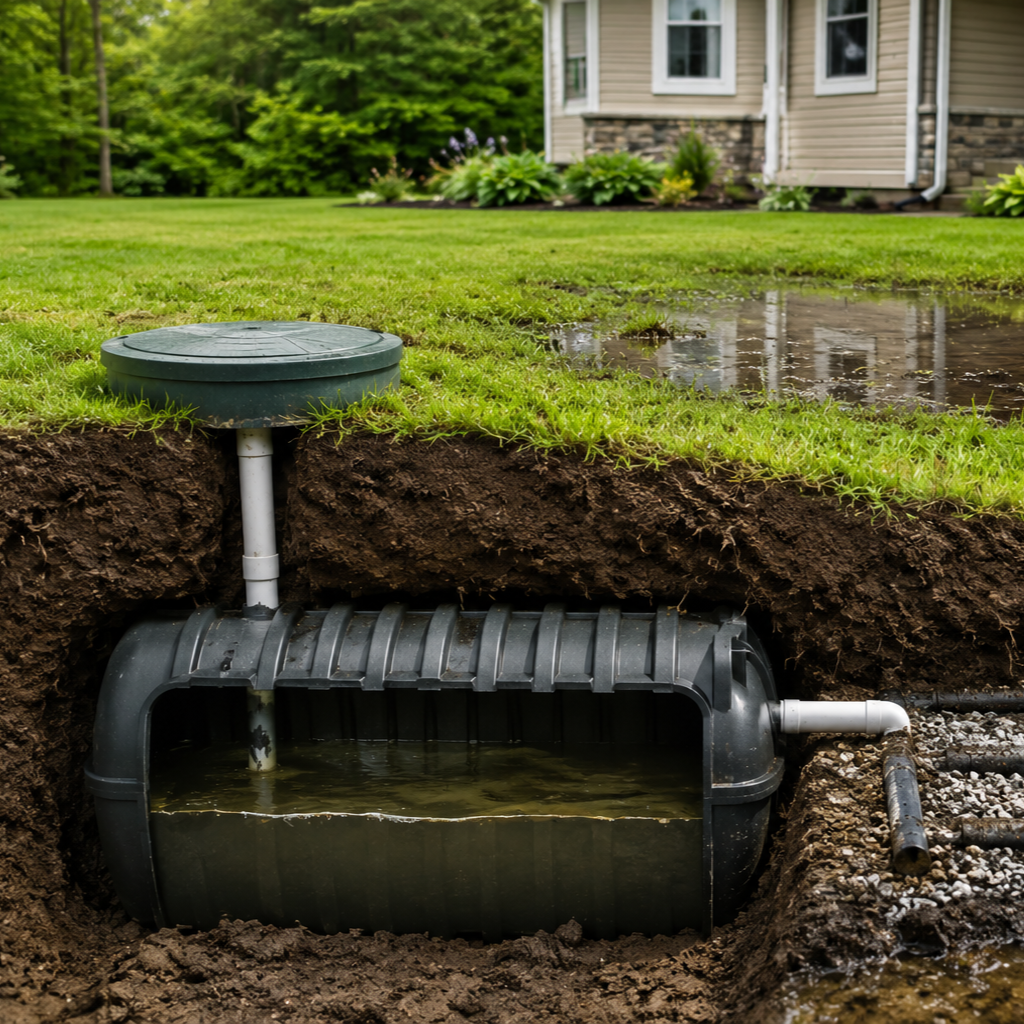
Quick Answer: Warning signs that a septic tank is full or failing include slow drains throughout the house, gurgling sounds in the plumbing, sewage backing up into drains or toilets, foul odors indoors or around the tank and drain field, and soggy, unusually wet, or unusually green grass over the drain field. These signs mean solids may be backing up or the system is struggling to handle wastewater. Catching them early matters because a full tank or failing system can lead to backups into the home and drain field failure, which is costly. If you notice several of these signs, have the tank inspected and likely pumped before the problem worsens.
A septic system works quietly out of sight, and most days you never think about it — until it starts showing signs of trouble. Learn to read those signs, and you can step in before a messy, expensive backup or a failed drain field. The warnings tend to build on each other, so catching them early keeps the fix manageable. Here is what to watch for.
Sign One: Slow Drains Throughout the House
One of the earliest and most common signs is crawling drains. When sinks, tubs, showers, and toilets throughout the house start draining slowly, the septic system is often the reason — the tank may be full, or the system isn't carrying wastewater away as it should. One slow drain on its own is usually a local clog. But slow drains everywhere at once point past any single fixture to the septic system itself. If the whole house is sluggish, the tank or system is asking for attention, and it's worth taking that seriously.
Sign Two: Gurgling and Backups
Gurgling in the plumbing — drains or toilets bubbling as water runs — is another tell, the sound of air and wastewater fighting their way through a system that's backing up. Worse still is the real thing: sewage coming back up into drains, toilets, or the lowest fixtures in the house. That's a clear, urgent sign the tank is full, or the system is failing, because the wastewater has nowhere to go and is heading back inside. It's about the most unpleasant and pressing warning there is, and it calls for fast action. Gurgling usually comes first, so treat it as an early heads-up about the same underlying problem.
| Sign | What it indicates |
|---|---|
| Slow drains throughout the house | Tank full or system struggling |
| Gurgling in drains or toilets | Wastewater not moving properly |
| Sewage backing up | Tank full or system failing — urgent |
| Foul odors indoors or outside | Waste or gases escaping |
| Soggy ground over the drain field | System not dispersing liquid |
| Unusually green grass over drain field | Effluent surfacing as fertilizer |
Sign Three: Foul Odors
Bad smells say a lot. A sewage-like odor inside the home, or out around the tank or drain field, means waste or sewer gases are escaping where they shouldn't be. A system that's working right keeps those smells contained, so when you start catching whiffs of sewage, it's a sign the system is full, backing up, or struggling to keep up with the waste. Odors right over the drain field are especially telling — they can mean wastewater is surfacing or the field is overwhelmed. So a sewage smell that won't quit, indoors or out, is the system flagging that it needs a look.
Sign Four: Problems Over the Drain Field
The drain field, where the liquid soaks back into the soil, shows its own signs when the system is failing. Ground over the field that's soggy, mushy, or unusually wet — especially when it hasn't rained — suggests the field isn't absorbing the water and that wastewater is surfacing instead. In the same way, grass over the field that's greener and lusher than the rest of the yard can mean effluent is rising and fertilizing it, a sign the field is overloaded. Standing water or wet patches over the drain field are real red flags. These outdoor clues point to drain field trouble, which is among the more serious problems a septic system can have.
Walk over your drain field periodically, especially during dry weather. Soggy ground, standing water, or grass that's noticeably greener and lusher than the rest of the yard are signs the system may be failing to disperse wastewater — early outdoor warnings that something is wrong before it becomes a backup or full failure.
Why You Shouldn't Wait
These signs matter because a full tank or failing system only gets worse — and pricier — the longer it's left. Slow drains and gurgling can lead to full backups in the home, which are both messy and a health risk. A struggling system can take the drain field down with it, and that's one of the costliest septic repairs going. Surfacing sewage is a hazard to your health and the environment, too. Catch the signs early — at the first slow drain, odor, or soggy patch — and you can get the tank inspected and pumped, or the issue handled, before it snowballs. Often, a full tank just needs pumping; caught in time, that's routine, while a neglected system can mean major repairs. A septic pro can inspect the system, determine whether it needs pumping or repair, and address the cause.
Frequently Asked Questions
Common signs include slow drains throughout the house, gurgling sounds in the plumbing, sewage backing up into drains or toilets, foul odors indoors or around the tank and drain field, and soggy or unusually green grass over the drain field. These indicate the tank may be full or the system is struggling. Several of these together strongly suggest the tank needs inspection and likely pumping.
When sinks, tubs, showers, and toilets throughout the house all drain slowly, it often points to the septic system rather than a single clog. The tank may be full, or the system may not be moving wastewater away properly. A single slow drain is usually a local issue, but whole-house slowness suggests the septic system needs attention, so it's worth having inspected.
Yes, it's one of the clearest and most urgent signs. Sewage backing up into drains, toilets, or the lowest fixtures means wastewater has nowhere to go and is returning into the home — indicating the tank is full, or the system is failing. This calls for prompt action. Gurgling sounds often precede a backup, serving as an earlier warning of the same problem.
Soggy, mushy, or unusually wet ground over the drain field, especially when it hasn't rained, suggests the field isn't dispersing the liquid properly, and wastewater is surfacing. Grass that's unusually green or lush across the field can indicate that effluent is surfacing and acting as fertilizer. These signs indicate drain field trouble or overload, a serious septic issue that needs prompt attention.
Foul, sewage-like odors around the septic tank or drain field indicate waste or sewer gases are escaping when they shouldn't be. A properly working system contains these odors; smelling sewage suggests the system is full, backing up, or failing to handle the waste, or that wastewater is surfacing over the drain field. A persistent sewage smell is a warning sign to have the system checked.
Have the septic tank inspected and likely pumped before the problem worsens. Often, a full tank needs pumping, which is a routine fix when caught early. If the system is failing, prompt attention prevents it from escalating to backups or a drain field failure, both of which are costly. A septic professional can inspect the system, determine whether it needs pumping or repair, and address the cause.
Catch the Signs Before the Backup
A septic tank that's full or failing sends warning signs — slow drains throughout the house, gurgling, backups, sewage odors, and soggy or unusually green ground over the drain field. These build over time, so noticing them early lets you have the tank pumped or the issue fixed before it becomes a backup or a failed drain field. When several signs appear, don't wait: an early inspection turns a potential disaster into a routine fix.
Noticing slow drains, odors, or soggy ground — Get your septic system inspected and pumped before it backs up. 3rd Generation Septic serves Lincoln, Pell City, Talladega. Call (256) 330-6960.
