
Signs of a Cracked Septic Tank: Leaking Out or In?
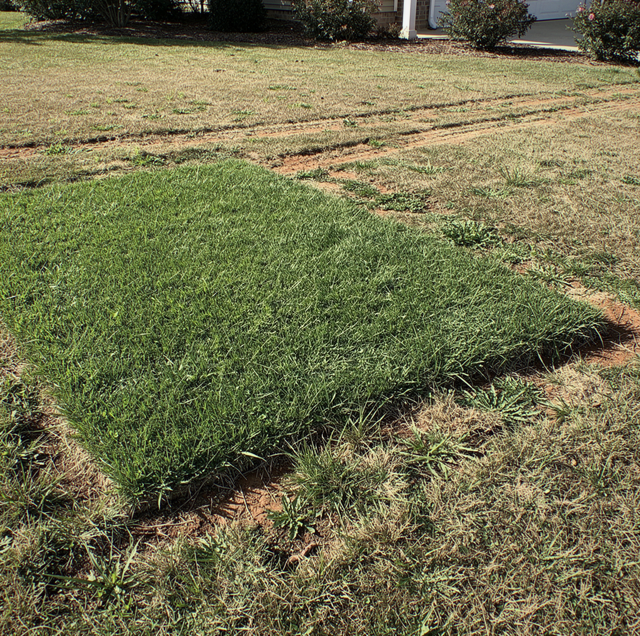
The pump truck came out in the spring and drew the tank down to the floor. By late summer, one strip of grass above it is a deeper green than anything around it, standing an inch or two taller, and the ground under that strip gives slightly when you walk across it. Nothing has backed up. No drain is slow. The lawn is telling on the tank well before the plumbing does.
A septic tank has one structural job: to hold. It keeps wastewater at a fixed level long enough for solids to settle and grease to float, then releases the clear middle band through the outlet and nowhere else. Crack the wall and the tank stops holding. Liquid crosses that crack in whichever direction pressure sends it, and that direction sets everything you can notice from the surface.
A septic tank is a confined space with no oxygen and gas that can overcome a person in seconds, and a cracked or sunken lid is a fall-in hazard that has killed children. Keep everyone clear.
A Crack Leaks in One of Two Directions
Liquid moves the way pressure tells it to. Inside a working tank, the level sits at the invert of the outlet pipe, the only opening liquid can leave through. Outside, the soil has its own water level, rising after rainfall and dropping during dry stretches.
Where a crack sits relative to that liquid line decides whether it does anything at all. A crack above the line stays dry and moves nothing until the tank surcharges, so the cracks that produce symptoms are the ones below it: the lower walls, the joint where the wall meets the floor, and the pipe penetrations, where the concrete is already interrupted and thinnest around the opening.
When the ground outside is drier than the tank, a crack below the liquid line lets effluent out. When the water table rises above that same crack, the pressure reverses and groundwater enters. One crack, two behaviors, and plenty of tanks do both inside a year: emptying themselves through a dry August, filling themselves through a wet March.
A Tank Leaking Out Wets the Yard and Starves the Field
Effluent escaping below the liquid line carries nitrogen and moisture into the soil right beside the tank, so that patch greens up, grows faster, and stays soft underfoot while the rest of the yard is firm. The lawn registers the change well before any fixture does. Wet ground after a storm means nothing; wet ground over the tank in the third week of a dry spell means liquid is arriving from somewhere other than the sky.
Odor follows the same map: a smell that sits over the tank and fades as you walk toward the drain field points at the tank, not the field. The field can even look healthier than usual, receiving less liquid than it was sized to take.
Then the schedule stretches. The tank draws itself down between visits, so the level a technician finds is lower than the household's water use accounts for, and an interval that once felt tight begins to feel generous. A pumping interval that keeps stretching on its own is not a sign the system is running well. It is a sign that the tank is emptying into the ground rather than through the outlet.
The soggy ground over a leaking tank holds raw effluent that never passed through the soil treatment a drain field provides. Keep children and pets off that patch, and do not mow it.
A Tank Leaking In Runs Full With Nothing to Fill It
In the reverse case, the household changes nothing, and the tank fills anyway. It stands full, sometimes above the outlet invert, days after a pump-out that should have bought weeks. Fixtures back up during and after wet weather, then behave for a month once the ground dries. The drain field is flooded with clear groundwater it was never sized to take, so it surfaces or slows though the household uses no more water than before.
Water gets in through a short list of routes: a crack below the water table, a failed seal where the inlet or outlet pipe passes through the wall, a separated joint where the riser meets the tank top, or a damaged riser that carries surface runoff down the shaft. Risers account for a large share of it, because that seam sits close to grade where mower wheels, settling backfill, and frost all reach it.
Inflow does more than fill the tank. Clean water displaces the volume needed for settling, so wastewater passes through faster than solids can drop out and material that should have stayed behind rides to the field. Gurgling sometimes accompanies an overfull tank, though it has several explanations unrelated to the tank's walls and is a weak signal on its own.
Concrete Cracks for Reasons You Can Usually Name
Concrete is strong in compression and weak in bending, and nearly every crack in a tank traces back to that one fact.
- Age and fatigue: Decades of soil loading, seasonal ground movement, and small settlements work a wall the way repeated flexing works anything brittle.
- Sulfuric acid on the crown: Bacteria in the tank give off hydrogen sulfide gas, which collects in the headspace above the liquid. Bacteria in the damp film on the concrete above the water line convert that gas into sulfuric acid, which dissolves the cement paste and leaves the stone aggregate standing proud, the way a sugar lump loses its edges in a damp dish. The submerged walls stay sound while the crown and upper walls thin out.
- Poor bedding: A tank set on uneven fill, or lowered onto a rock left in the excavation, carries its weight on a few points instead of across its floor. The floor bends, and concrete in bending cracks.
- Root pressure: A large tree rooting toward the moisture around a tank puts steady force against the wall and its pipe penetrations.
- Vehicle traffic over the lid: Standard residential tanks and lids are cast for soil cover and foot traffic, not wheel loads.
- Freeze-thaw: Water in a hairline crack near grade expands each freeze and levers it wider each winter.
Baffles and Tees Fail Separately and Mimic a Cracked Tank
Two small parts inside the tank fail on their own schedule and produce a symptom list much like that of a leaking wall. The inlet baffle or sanitary tee turns incoming flow downward so a flush cannot punch through the floating scum and stir settled sludge. The outlet baffle or tee reaches below the scum and above the sludge, so only the clarified middle band leaves for the field.
Both are subject to the same acid that thins the crown, and older tanks with cast-in concrete baffles can lose them entirely while the walls stay sound. Plastic tees crack or slip out of the outlet. Either failure sends grease and solids to the field, produces odor, and shortens the field's life by years.
The separator is the liquid level. A missing baffle does not change where the water sits; a cracked wall does. That reading is taken by a technician with the tank open and measured against the outlet invert, never estimated from the surface.
The Lid and the Riser Are the Damage You Can Actually See
The lid is the only part of a septic tank most people ever lay eyes on, and it is the part that fails first. Concrete lids spall and crack from acid attack underneath and load from above, older lids sink as the backfill around them settles, and some tanks are still wearing whatever a previous service call left behind: a sheet of plywood, a scrap of steel, a paver set over the opening.
A damaged lid is not a cosmetic problem at the top of the system. It is the one septic failure that can kill somebody standing in their own yard, and the people most at risk are the ones least likely to read a warning sign.
If a lid is cracked, sunken, shifted, or missing, the whole job is containment: keep every person and every animal off that ground, keep vehicles away, and call for service the same day. Do not step on it to test how solid it feels. Do not slide it back to look.
Risers carry a quieter version of the same problem. A riser is the vertical shaft bringing the access opening up to grade, and the seam where it meets the tank top can separate. Surface water then runs in, and soil washes in with it.
An Inspection Reads the Walls Dry
An inspection starts with the pump truck, because the walls that carry the answer sit under four feet of liquid until the tank is emptied. Pumping is the first step in a real inspection, not a separate service, and once the walls are drawn down and rinsed, cracks, spalled concrete, a thinned crown, and missing baffles become visible for the first time.
The second half is the level work. After pumping, the tank is refilled or allowed to refill, and the static level is read against the outlet invert after a set interval. A level that settles below the invert indicates that liquid is leaving via a route other than the outlet. A level standing above it with no household flow to explain it means water is arriving from outside. A tracer dye run in at a fixture and watched for in a wet patch near the tank confirms the path.
Weather is part of the reading. A tank that leaks out declares itself during a dry stretch; one that takes on groundwater declares itself after heavy rain.
Frequently Asked Questions
A well-installed concrete tank is generally expected to serve 30 to 40 years, and plenty run longer. What shortens that number is rarely the buried walls; it is the concrete above the liquid line. A tank that has also been subjected to vehicle traffic or poor bedding can be finished decades early.
Sometimes, the deciding factors are where the crack sits and how much sound concrete surrounds it. A tight crack in an otherwise solid wall can often be excavated and sealed on the soil side with hydraulic cement or a structural epoxy, which is why this repair is performed from outside the tank. A crack through the floor, or a top eaten until the aggregate is loose, means the concrete has lost material, and those tanks get replaced.
They do not corrode: there is no cement paste for acid to dissolve, so the failure that ends most concrete tanks does not apply. Their trouble is mechanical: thin walls deform under backfill containing rock, seams split, and an empty tank in saturated ground can float up out of its bed and tear its inlet and outlet connections apart. That is why a plastic tank is normally refilled with water as it is pumped when the water table is high.
Only where a seam already exists. A root finds a joint, a pipe penetration, or an existing crack, thickens inside it, and levers it wider season after season instead of boring through sound concrete. Willow, poplar, and silver maple cause the most trouble, which is why keeping those species well clear of the tank and field is far easier than taking one out after it has found a seam.
No. Pumping the week before is one of the more common ways a seller hides a problem without meaning to: the tank has no static level left to read, and the drain field gets a rest it would never get in normal use, so both appear better than they are. Book the pump-out as part of the inspection.
It is worth treating as one. Soil does not vanish, so if the ground above the tank has dished, that soil has usually washed down through a separated riser joint, a broken lid seam, or a failed pipe penetration, and it is now sitting in the bottom of the tank as grit. The depression also warns that whatever lies under it may have lost the strength to hold a person's weight.
Suspect a cracked tank or a damaged lid — get the tank pumped down and its walls, baffles, and liquid level checked before the drain field pays for it. 3rd Generation Septic serves Lincoln, Pell City, Talladega. Call (256) 330-6960.
