
What a Septic Inspection Actually Checks (Full List)
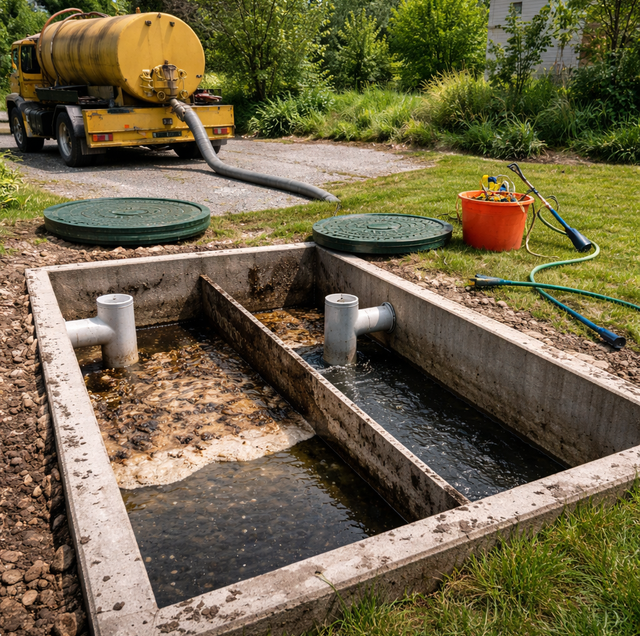
Quick Answer: A real septic inspection is two jobs at once: measuring what is inside the tank and reading how the whole system moves water. Inside, the inspector gauges the sludge and scum layers, checks the liquid level, and looks over the baffles, tees, effluent filter, and tank walls for cracks. Outside, they open and inspect the distribution box and walk the drain field for wet or lush spots, often adding a flow or dye test to confirm the effluent is going where it should. A backed-up floor drain is not part of a good inspection; measured layer depths and a checked field are.
The word "inspection" hides a lot of range. Two people can both say their septic system was inspected and mean very different things: one had a technician lift the lid, glance at the liquid, and call it fine; the other had every layer measured, the field walked, and the flow tested end to end. Only the second one tells you whether the system will keep working. Knowing what a thorough inspection actually covers is what lets you tell a real evaluation from a quick look, and it is the difference between catching a problem as a repair and discovering it as a replacement.
What the Inspector Is Really Measuring
A septic system is a settling tank feeding a soil filter. Wastewater enters the tank, solids sink into a sludge layer on the bottom, fats and grease float up into a scum layer on top, and the clarified liquid in the middle, the effluent, flows out to the drain field where the soil treats it. An inspection follows that same path. It checks whether the tank is holding solids back the way it should, whether the plumbing that guides the flow is intact, and whether the field can still accept the water the tank is sending. Every individual check below is one reading on that single question: Is water moving through the system the way it was designed to, or is it stalling somewhere?
Inside the Tank
Sludge and Scum Layer Depths: The core measurement of any inspection is how much solid material has built up. The inspector measures the thickness of the bottom sludge layer and the top scum layer, and how much clear space is left between them for effluent. A common threshold is that the tank needs service once the combined solids fill roughly a third of the tank, or when the sludge rises to within about a foot of the outlet. These depths are what tell an inspector whether the tank is due to be emptied, not the calendar and not a guess from the liquid's appearance.
Liquid Level: Where the water sits tells its own story before anything is measured. A level that sits right at the bottom of the outlet pipe is normal. Water standing above the outlet means liquid is backing up, a sign the drain field or the outlet line is not accepting flow. Water sitting below the outlet can mean the tank is leaking out through a crack or a failed seal. The liquid level is read first because it frames everything found afterward.
Baffles and Tees: At the inlet and outlet, baffles or sanitary tees force the incoming and outgoing water to move through the clear middle band of liquid, keeping scum from washing straight out to the field. These are inspected for cracks, corrosion, and pieces that have broken off or rotted away. Older concrete baffles corrode from the gases in the tank, and a missing outlet baffle is one of the most common defects found, because without it, scum flows directly into the drain field lines and shortens their life.
The Effluent Filter: Many tanks have a filter fitted inside the outlet tee that catches fine solids before they can reach the field. The inspector checks whether one is present, whether it is seated correctly, and how clogged it is. A filter caked solid explains slow drains inside the house and is a quick, cheap thing to clean, but a filter that was never there means fines have been reaching the field for years.
Tank Integrity and Cracks: The walls, floor, and lid are examined for structural cracks, spots where groundwater is seeping in, and concrete that has softened or crumbled from decades of tank gases. Small hairline cracks are common and often harmless. Cracks that let water in either direction matter, because a tank that lets groundwater in overloads the field, and a tank that lets sewage out contaminates the soil around it. The condition of the lid and its riser is noted too, since a cracked or unsecured lid is both a contamination path and a safety hazard.
Outside the Tank
The Distribution Box: Past the tank, a distribution box, or D-box, splits the effluent evenly among the several drain field lines. The inspector opens it to check that flow is being shared, not dumping into one line while the others sit dry. A D-box that has tipped, cracked, or silted up sends all the load to one trench, wearing out part of the field years early while the rest goes unused. It is a small, buried component that quietly decides how long the whole field lasts.
The Drain Field: The field itself cannot be opened up, so the inspector reads it from the surface and from what the flow tests reveal. They walk the area over the trenches looking for standing water, soft or spongy ground, and grass that grows greener, taller, and faster than the surrounding lawn, all signs that effluent is surfacing instead of soaking in. A sewage or rotten-egg odor over the field points the same way. These surface clues, combined with the layer measurements and flow behavior, are how the hidden half of the system gets graded.
The Tools and Tests
Sludge Judge and Probe: Layer depths are not eyeballed. The main tool is a clear, hollow tube, often called a sludge judge, lowered to the tank floor: it traps a core sample so the sludge and scum bands are visible and measurable against markings on the tube. A separate probe wrapped in a towel checks the scum layer's thickness and firmness. Out in the yard, a soil probe or a metal rod is pushed into the ground over the field to feel for saturation and to help trace where the buried trenches run.
Dye and Flow Testing: To confirm the system moves water the whole way through, an inspector runs water into it, sometimes hundreds of gallons to mimic a normal day's use, and watches whether the tank level rises and holds. A dye tablet added to the water shows up at the surface if effluent is breaking through the ground where it should not, exposing a failing field that looked dry at a glance. Flow testing is the check that turns a static snapshot into a picture of the system actually working under load.
Point-of-Sale Versus Routine
Not every inspection has the same job. A routine or maintenance inspection, the kind paired with regular service, is mostly about the tank: measure the layers, check the baffles and filter, decide if it needs pumping, and note anything trending wrong. A point-of-sale inspection, done when a property changes hands, is deliberately deeper, because a buyer is taking on whatever the system hides. That version almost always includes locating and fully uncovering the tank, a flow or dye test, and a close look at the drain field and distribution box, since the cost of a missed failure lands on someone new. If the inspection is tied to a sale, the flow test and field evaluation are not optional extras; they are the point.
If your inspection is tied to a home sale, confirm up front that it includes a flow or dye test plus a full look at the drain field and distribution box. A glance at the tank alone can miss a failing field that a buyer would inherit.
What the Findings Actually Mean
A finished inspection is a set of readings, and their value is in how they combine. Thick sludge with a clear field means a tank simply due for pumping, an easy fix. Normal layers but a soggy field point past the tank to the soil, a far bigger issue. A liquid level above the outlet with clean tank internals sends attention downstream to the D-box or the field. Missing baffles and a caked filter explain why a young field might already be struggling. No single number condemns a system; the inspector reads them together to separate "empty the tank and carry on" from "the field is at the end of its life."
Inspection Cadence Versus Pumping Cadence
Inspection and pumping are two different clocks, and it helps to keep them apart. Most tanks need pumping every three to five years, set by household size and tank volume. Inspection of the full system is often recommended more often than that, yearly to every few years, because the point of an inspection is to catch a shifting D-box, a failed baffle, or a field starting to saturate long before the next pump-out would. Pumping empties the tank; inspection reads the whole system. A home that only ever gets pumped, and never truly inspected, can lose its drain field to a small broken baffle no one ever looked at.
A septic tank holds gases that can be poisonous and is both a confined-space and a drowning hazard. Every check inside the tank, and any probing or digging near it, is professional work done with the right equipment and never a job to attempt yourself. Underground utilities must be marked before anyone digs to locate a tank or field.
One firm caution runs under all of this: a septic tank holds gases that can be poisonous and is a confined-space and drowning hazard. Every check inside the tank, and any probing or digging, is professional work done with the right equipment and never a job to attempt yourself. Before anyone digs near a tank or field to locate it, underground utilities have to be marked first. Reading the surface signs is all a homeowner should do on their own.
Frequently Asked Questions
A thorough inspection with a flow test usually runs one to two hours, and longer when the tank has to be located and dug out first. Much of that time is the flow or dye test, which needs water run into the system and then a wait to watch how the level holds and whether dye surfaces, something that cannot be rushed. A ten-minute "inspection" that skips the wait has skipped the part that reveals a failing field, so the clock itself is a clue to how complete the visit was.
It is usually better not to. A tank pumped the day before hides the very evidence an inspector needs: the sludge and scum depths and the stains on the walls that show the normal operating level and any past overflows. A good inspector wants to measure the layers as they naturally sit, then pump afterward if the readings call for it. The exception is a tank so full it cannot be assessed at all, but that decision is the inspector's to make, not something to do preemptively.
Not exactly, but it estimates the remaining life. Inspectors judge a field by how it accepts water under a flow test, the condition of the soil surface, and the design and materials, then weigh that against the typical twenty-to-thirty-year working life of a field. A field that drains well under load and shows no surfacing may have years left even if it is old; one that saturates quickly can be near the end while still fairly young if it was overloaded. The report gives a condition and a rough runway, not a birth certificate.
Cameras are used in septic work, but mainly on the pipes rather than the tank or the buried field trenches. A push camera can inspect the building sewer between the house and the tank to find bellies, roots, or breaks, and it can look down the inlet and outlet lines. The perforated field laterals sit in gravel and are not built to be scoped, so the drain field is judged by flow behavior and surface signs instead of by camera. If someone offers to camera the field itself, ask what they actually mean.
A standard septic inspection stops at the septic system, but a point-of-sale inspection often pairs with a separate check of well-water safety and of the distance between the tank, the field, and any nearby well. Contamination risk rises when a failing field sits too close to a water source, so the two are frequently looked at together during a sale even though they are different tests. If well water matters to you, ask for that as its own line item rather than assuming the septic inspection covered it.
Ask for a written report that lists the actual measured layer depths, the condition of each component checked, the results of any flow or dye test, and a clear status for the tank and the field separately. A one-line "passed" with no numbers is nearly worthless, because it gives you nothing to compare against at the next inspection and no record of what was really found. Keeping these reports over the years turns isolated visits into a trend line that shows how fast the tank fills and whether the field is slowly weakening.
Book a full-system septic inspection before small problems turn into a new drain field — get every layer measured and the field checked by licensed pros. 3rd Generation Septic serves Lincoln, Pell City, and Talladega. Call (256) 330-6960.
