
What Causes a Drain Field to Fail? 7 Real Reasons
Quick Answer: A drain field fails when the soil around it can no longer accept water. The usual reasons are a biomat that has sealed the trench bottom, a tank that went too long without pumping and pushed solids into the lines, too much water flooding the field, or roots and compaction crushing the pipes. Most of these are slow and preventable, and the earliest sign is soggy ground or a slow drain, not a full-blown backup.
Your drain field is the quiet half of a septic system, and the half people forget until it stops working. The tank gets the attention because it needs pumping. The field sits underground doing its job for years, so when it finally gives out, the failure feels sudden. It usually isn't. A drain field almost always dies slowly, and it leaves a trail of hints before the yard turns swampy. Understanding what breaks down the field (and how the causes differ) lets you catch a problem while it is still a repair rather than a replacement.
What the Drain Field Actually Does
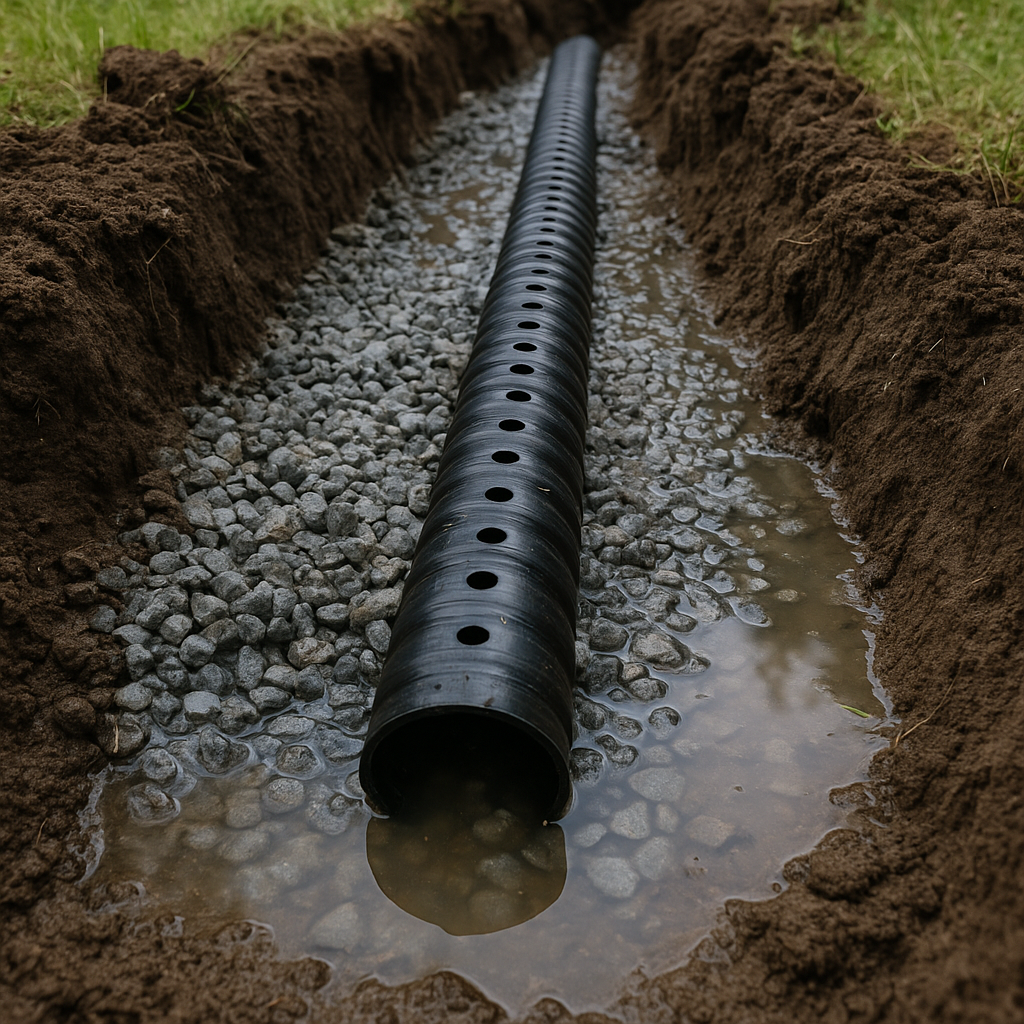
After wastewater sits in the septic tank, the heavy solids settle to the bottom as sludge, and the fats and grease float to the top as scum. The clarified liquid in the middle, called effluent, is what leaves the tank and flows out to the drain field, also called a leach field. Out there, a network of perforated pipes sits in gravel-filled trenches, and the effluent trickles out into the surrounding soil.
The soil is the real treatment plant. As the liquid moves down through it, the soil filters out remaining particles, and native bacteria break down the rest before the water rejoins the groundwater. The whole thing depends on one simple condition: the soil has to be able to accept water. When it can no longer absorb what the tank sends, the field has failed, and everything below is just another way of arriving at the same point.
The Biomat Grows Too Thick
At the bottom and sides of every trench, a black, slimy layer forms where the effluent meets the soil. This is the biomat, a mat of bacteria that feeds on the organic material in the wastewater. In small amounts, it is not a problem; it is part of how the system treats the water, adding a layer of biological filtering right at the soil interface.
The trouble starts when the biomat grows too thick. Think of it like a coffee filter: a clean one lets water through easily, but pack it with grounds and the water backs up and pools on top. A biomat that has thickened beyond a certain point seals the soil, so water can barely pass through. This is the leading cause of long-term drain field failure, and it is usually driven by overloading the field, sending it more waste, more water, or more solids than the bacteria can keep up with over the years.
The Tank Was Never Pumped
This is the most preventable cause and the one that frustrates septic pros most, because it is a tank problem that kills the field. The tank is supposed to hold solids back so that only clarified liquid reaches the drain field. When the tank goes too long without pumping, the sludge and scum layers build up until there is no room left for them to settle. Solids and greasy scum then wash straight out into the drain field lines.
Those solids do what solids do in a pipe: they clog. They plug the perforations in the distribution pipes and pack the gravel and soil so water can no longer seep through. Once the field is choked with material that was never supposed to reach it, the damage is often permanent. Most households need a pump-out every three to five years, depending on tank size and how many people use it, and that single habit is the cheapest insurance a drain field can get.
Too Much Water at Once
A drain field can only accept water at a certain rate. When more water arrives than the soil can absorb, the field stays saturated, and effluent has nowhere to go. This is a hydraulic overload, and it comes from a few directions. A running toilet or a leaking fixture can quietly pour hundreds of extra gallons into the system every day. A household that does every load of laundry on the same day, or a home suddenly holding more people than the system was sized for, pushes more through than the field can handle.
Water from outside counts too. Downspouts, gutters, and surface runoff aimed toward the field, or a French drain that empties nearby, keep the soil soaked before the septic system adds a drop. Redirecting that runoff away from the field is one of the simpler fixes on this list, and it protects the ground's ability to do its real job.
Roots and Compaction
The pipes and soil in a drain field are more fragile than they look. Tree and shrub roots are drawn to the steady moisture and nutrients in the lines, and they will grow into the pipes and the gravel, cracking pipes and blocking flow the same way roots invade a sewer lateral. Keeping trees and deep-rooted shrubs well back from the field prevents a slow, hard-to-see strangling of the system.
Compaction is the faster kind of damage. Soil treats water by staying loose and porous, full of tiny air spaces, through which the liquid moves. Driving or parking a vehicle over the field, storing a trailer there, or running heavy equipment across it can press those spaces closed and crush the shallow pipes outright. A drain field should be lawn and nothing heavier, no patio, no shed, no parked truck.
Grease, Chemicals, and Things That Don't Break Down
What goes down the drains in the house eventually ends up in the field. Fats, oils, and grease poured down the kitchen sink congeal and coat the soil, sealing it much like an overgrown biomat. Harsh chemicals (solvents, large volumes of bleach, drain cleaners) can kill off the bacteria the system relies on, both in the tank and in the field, leaving the biology unable to keep up. And non-degradable items that get flushed, from wipes labeled "flushable" to hygiene products, ride through the tank and plug the lines. The field has no way to process any of it.
Age and Saturated Ground
Even a well-maintained field does not last forever. Drain fields commonly serve for about 20 to 30 years, and a field can reach the end of its working life as the soil's capacity wears down over decades of use. Age alone is a legitimate reason a field fails, and no amount of care extends it indefinitely.
Local ground conditions set the pace. Where clay-heavy soils drain slowly to begin with, the margin for error is thinner than it would be in sandy ground. After a stretch of heavy rain, the water table can rise, and the ground around the field can remain saturated, leaving the soil unable to accept effluent until it dries out. That is a wet-season stress, but it is only one stressor among many. A field is worked just as hard the rest of the year by everyday overloading and skipped pump-outs, so a system that is close to the edge will show it, whether the ground is soaked or bone dry. Wet weather reveals a weak field; it rarely creates one on its own.
How to Tell a Field Is Failing
The symptoms tend to show up in the yard and at the drains together. Watch for standing water or soggy, spongy ground over the field, and for grass there that grows greener, taller, and softer than the rest of the lawn, a sign that effluent is surfacing and fertilizing it. A sewage or rotten-egg smell drifting across the yard points the same way. Inside, drains that slow down throughout the house, gurgling in the pipes, and backups at the lowest fixtures say the effluent leaving the tank has nowhere to go.
One firm caution: a septic tank and its lines hold gases that can be poisonous, and an open tank is a confined-space and drowning hazard. Reading the signs above from the surface is all you should do for yourself. Diagnosing the field, opening the tank, or entering it is a job for a licensed professional with the right equipment, never something to attempt on your own.
Frequently Asked Questions
It depends on what failed and how far it has gone. A field that is saturated or has a thickening biomat can sometimes recover if the load is cut and the ground is allowed to rest and dry, reducing water use, fixing leaks, and diverting runoff so the bacteria can catch up. Some systems respond to mechanical cleaning of the lines. But once soil is packed with carried-over solids or the pipes are crushed by roots or compaction, resting won't bring it back, and replacement becomes the honest answer. A professional evaluation is what distinguishes the two situations.
The clearest test is what happens right after a pump-out. If the tank were simply full, pumping it would restore normal drainage, and the relief would last. If the drains slow down again within days or weeks of pumping, or the yard over the field stays wet regardless of the tank level, the problem is downstream in the field itself. Soggy ground and surfacing effluent over the field, specifically, point past the tank, a full tank causes indoor symptoms, but it doesn't flood the lawn.
Knowing its footprint is the first step to protecting it, and there are a few ways to pin it down. The cleanest is the as-built diagram filed with your county health department when the system was permitted, which usually shows the tank and field layout. On the ground, the field often gives itself away: look for parallel strips of grass that green up faster, grow taller, or stay wetter than the rest of the yard, since the effluent feeds and waters them. You can trace the direction by noting where the pipe leaves the tank, and a septic professional can locate the lines precisely with a probe or a flushed transmitter. Once you know where it runs, you can keep vehicles, structures, and deep-rooted trees off it and plan any digging well around it.
Be skeptical. A healthy system already grows the bacteria it needs from ordinary household waste, and there is little solid evidence that store-bought additives rescue a field that is failing from thick biomat, carried-over solids, or compaction, none of which a bottle can undo. Some harsh additives can even harm the biology by killing off the very bacteria doing the work. Additives are no substitute for pumping the tank on schedule and managing the water load, and treating a failing field with them mostly buys delay, not a repair.
Many fields serve for twenty to thirty years, though the range is wide and depends heavily on care and soil conditions. The habits that stretch that lifespan are the same ones this article keeps circling back to: pump the tank every three to five years so solids never reach the field, conserve water and fix leaks so the soil isn't kept saturated, divert gutters and runoff away from the field, and keep roots, vehicles, grease, and harsh chemicals out of the picture. A field that is protected from overload can reach the top of that range; one that is abused rarely reaches the bottom.
It gets worse, and the failure moves indoors. Effluent that can't soak into the ground backs up through the lowest drains in the house, and untreated sewage surfaces in the yard, posing a genuine health hazard to people and pets and a risk to nearby groundwater and wells. Waiting also narrows your options: a field that might have been rested back to health early often can't be saved once solids have packed the soil, turning a smaller repair into a full replacement. The cheaper, cleaner path is always to act on the first soggy spot or slow drain.
Have your drain field inspected before soggy ground turns into a backup — catch the problem while it's still a repair. 3rd Generation Septic serves Lincoln, Pell City, Talladega. Call (256) 330-6960.
