
Why Do I Smell Sewage in the Yard? What the Odor Is Warning You About
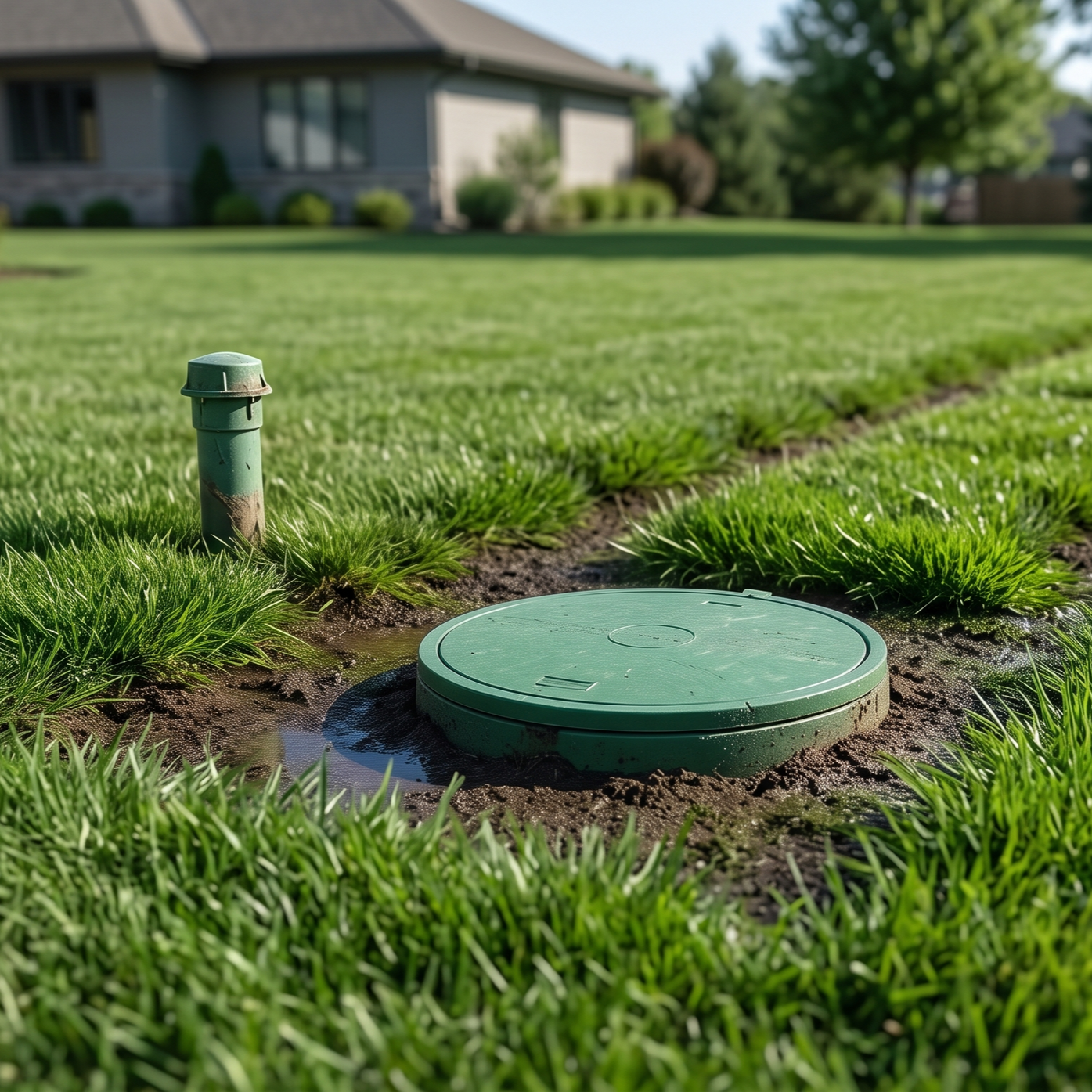
You walk out to the mailbox, or you are pulling weeds near the back fence, and it hits you: the unmistakable stink of sewage rising off your own lawn. It is not subtle, and it does not belong there. On a home tied to a septic system, that outdoor odor is almost never random. It is a signal that gas or effluent is getting out where it should be sealed in.
Quick Answer: A sewage smell in the yard means the septic system is releasing gas or liquid waste at ground level instead of containing it underground. The usual causes are an overfull tank, a failing drain field pushing effluent to the surface, a cracked tank lid, or a blocked vent. The odor is a warning, not a nuisance to spray over, and the source needs to be found and fixed.
What the Smell Is Actually Telling You
A working septic system is a closed loop. Wastewater leaves the house, settles in the tank where solids drop out, and the liquid that remains, called effluent, flows to the drain field where soil filters it before it rejoins the groundwater. Gases from the breakdown of waste are supposed to rise and exit through a vent that clears the roofline. Done right, none of that reaches your nose in the yard.
So when you catch that smell outdoors, one of two things is happening. Either gas is leaking from a spot it should not, or effluent is surfacing when it should be soaking away underground. Both are the system telling on itself, and both point to a place where the seal has broken, or the flow has backed up.
Think of the whole setup like a sealed drink with a straw. As long as the lid is tight and the straw runs where it should, nothing spills, and no smell escapes. Crack the lid, kink the straw, or overfill the cup, and the contents find their way out the nearest weak point. Your yard is telling you the cup has a problem.
The Usual Suspects Behind an Outdoor Sewage Smell
Several failures produce that same rotten, sulfur-and-waste odor. Sorting them out starts with understanding what each one does.
An overfull tank- When a tank goes too long without pumping, the sludge layer on the bottom and the scum layer on top both grow until there is little room left for liquid to settle. Effluent then leaves before it is properly separated, or the tank simply cannot hold what the house sends it. Pressure builds, and odor escapes from the tank or gets pushed out toward the field.
A failing or saturated drain field- The field is a network of perforated pipes in gravel-filled trenches that let effluent seep into the soil. Over the years, a biological mat of solids builds along the trench walls, and aged or undersized fields lose their ability to absorb. When the soil can no longer take the liquid, that partially treated effluent rises toward the surface instead of soaking down. The result is a wet, smelly strip of ground directly over the buried lines.
A cracked or loose lid or riser- Septic tanks are sealed with a heavy concrete lid, and many have a riser, a vertical collar that brings the access point up near the surface. A cracked lid, a loose or missing riser cap, or a failed gasket lets gas seep straight up into the open air right over the tank.
A blocked vent- The plumbing vent stack runs up through the roof to carry sewer gases high above the house. Some systems also have field or tank vents. If any of these clog with debris, a bird nest, or ice, the gases that should exit up top look for another way out, and they surface at ground level near the house or over the system.
A broken pipe- The line running from the house to the tank can crack, separate at a joint, or get crushed by roots or shifting soil. When it does, raw wastewater leaks into the ground before it ever reaches the tank, and the smell tends to concentrate between the house and the tank location.
Where the Smell Is Strongest Points to the Cause
Your nose is a decent diagnostic tool here. Walk the yard and notice where the odor peaks, because location narrows the list fast.
If the smell is strongest right over the tank, near the lid or riser, suspect a sealing problem: a cracked lid, a loose cap, or a failed gasket letting gas escape. This is often the more contained issue.
If the smell is strongest out over the drain field, especially paired with soggy or spongy ground, you are likely looking at effluent surfacing because the tank is overfull or the field is struggling to absorb. This is the more serious end of the range.
If the smell is strongest near the house or a foundation wall, think vent or pipe: a blocked vent stack pushing gas down low, or a broken line between the house and the tank leaking on its way out.
None of this replaces a professional inspection, but it tells you and the technician where to start digging, sometimes literally.
Why This Is Not a Problem You Spray Away
It is tempting to treat a yard smell as a cosmetic annoyance that an odor spray will handle. It will not. Masking the smell leaves the actual failure in place, and septic failures do not improve on their own.
Surfacing effluent is a genuine health hazard. It carries bacteria and pathogens, and it sits where children play, where pets roam, and where it can run toward a well or storm drain. A field that is pushing liquid to the surface is also a field that is failing, and a failing field left alone tends to fail harder and more expensively. The odor is an early warning; the value is in reading it before the whole system quits.
The real fix is finding the leak or the overfill. That means getting the tank checked and, if it is due, pumped, and having the field, lids, and vents inspected so the source is identified rather than guessed at. A cracked lid is a comparatively contained repair. A failing field is a larger project. The only way to know which one you have is to look, and that is a job for someone with the equipment to open, measure, and evaluate the system safely.
The Rain Factor Cuts Both Ways
Weather plays into this, and it is worth understanding in both directions. When heavy rain saturates the ground, the soil around the drain field fills with water and loses its capacity to accept more liquid. Effluent that would normally seep away has nowhere to go, so it backs up and gets pushed toward the surface. That is why odor and sogginess often spike right after a storm and ease as the ground drains out over the following days.
But rain is not the whole story, and a system that only smells because of one wet week is different from one that smells year-round. In dry stretches, an overfull tank, a cracked lid, or a clogged vent will produce the same odor with no rain involved at all. Clay-heavy soils drain slowly to begin with, so a field that is already aging or undersized can surface effluent in a normal week and simply get worse when the water table rises. Read a rain-driven smell as a stress test: if the system struggles every time it is wet, it is telling you it is closer to its limit than it should be.
A Note on Safety and What Comes Next
Two rules matter more than any diagnostic tip. First, keep people and pets off any soggy, smelly ground over the tank or field until it has been cleared. That standing effluent is contaminated. Second, and this is not negotiable, never open and enter a septic tank yourself. The gases that collect inside are toxic and can displace oxygen, and they can be fatal within minutes without any clear warning. Tank work is a job for professionals with the right gear and training, every time.
What you can do is act instead of ignore. Note when the smell started, whether it tracks with rain, and where in the yard it is worst. Keep off the wet spots. Then have the system evaluated so the tank can be checked and pumped if it is due, and the field, lids, and vents inspected. Pumping intervals for most households fall in the range of every three to five years, depending on tank size and household count, and staying on that schedule is one of the simplest ways to keep effluent where it belongs. A smell in the yard is your system asking for attention. The sooner it gets it, the smaller the fix tends to be.
Frequently Asked Questions
Location is half the answer, and timing is the other half. An odor that appears only when a specific fixture drains points to the house sewer line or a dried-out indoor trap, because the smell rides with that one flow. A constant yard smell that never lets up points instead to the tank or field outdoors, where gas or effluent is escaping around the clock. Noticing both where the odor peaks and when it comes and goes narrows the source far faster than either clue alone.
The tell is in the grass and how long it stays wet. Turf that runs greener and grows noticeably faster in strips over the buried lines, and stays spongy underfoot for days after rain, is what separates a failing field from one that is simply well-watered. That pattern shows up because effluent is feeding and saturating the ground rather than draining away. A patch that dries out within a day of rain is ordinary; one that stays soft and rank long after is effluent that has nowhere left to go.
It is meant to, and on many properties, the yard vent is the same stack that carries the household plumbing gases up through the roof. When the layout keeps pushing gas low instead of clearing it overhead, a carbon vent filter can be fitted to the roof terminal to scrub the odor as it exits. That is a targeted fix for a persistent smell that traces to the vent rather than the tank or field. If a blockage is the cause, clearing the obstruction comes first, and the filter addresses what lingers after.
Often, yes, and that is the cheapest outcome to hope for. A riser cap or a lid gasket is a low-cost part that a technician can swap in minutes, which is worlds apart from a drain-field repair in both effort and expense. Because the gap is that wide, confirming the source right at the lid first can save a needless field diagnosis. If sealing the access point ends the odor, the problem was contained the whole time, and no deeper work was ever warranted.
A healthy field usually recovers within a day or two once the ground drains and regains room to accept liquid again. So the real signal is not the spike itself but how long it lasts. A field that stays soggy and smelly well after the rain has passed is telling you it is undersized or clogging, not just handling one wet week. Watch the recovery window: quick drying is normal, while lingering saturation indicates that the absorption capacity is falling short.
It is truly dangerous, not merely unpleasant. Septic gas contains hydrogen sulfide and methane, and surfacing effluent carries bacteria and other pathogens, so what you are smelling represents a real health hazard rather than just a bad odor. That is why the right response is to keep people and pets off any soggy spots and have the system checked, rather than reaching for a spray to cover it. Treating it as a contamination issue, not an air-freshener problem, is the safe call.
Have your septic system inspected before a yard smell turns into a failed field — early diagnosis keeps the fix small. 3rd Generation Septic serves Lincoln, Pell City, Talladega. Call (256) 330-6960.
