
Why Does Your Septic Back Up After Heavy Rain?
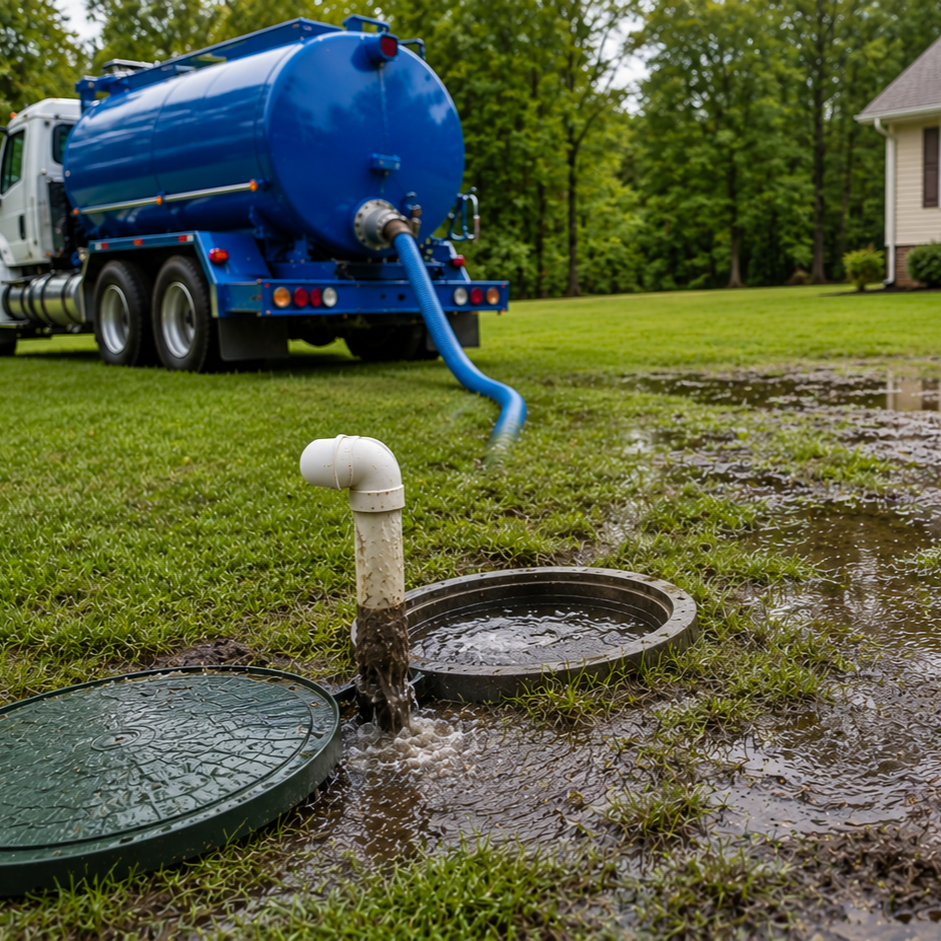
Quick Answer: A septic system can back up after heavy rain because the drain field relies on the surrounding soil to absorb the wastewater, and when heavy rain saturates that soil, there's no room for the effluent to go. The waterlogged ground can't accept more water, so wastewater backs up in the system and can come into the home or surface over the field. This is more likely if the system or drain field is already marginal — overdue for pumping, aging, or undersized — since a healthy field handles normal rain better. Reducing water use during and after heavy rain, directing surface water and downspouts away from the field, and keeping up with pumping all help reduce rain-related backups.
It's a frustrating and confusing situation: heavy rain comes through, and suddenly your septic system backs up. The connection isn't obvious until you understand how a septic drain field works — and once you do, it makes sense why a saturated yard can overwhelm the system. This is why heavy rain causes septic backups, and what can reduce the problem.
How Rain Affects the Drain Field
A septic system's drain field disperses the liquid wastewater (effluent) from the tank into the surrounding soil, where it's absorbed and naturally filtered. This depends entirely on the soil’s ability to accept water. Normally, the soil absorbs the effluent, and the system works fine. But the soil can only hold so much water. When heavy rain saturates the ground around the drain field, the soil becomes waterlogged — full of rainwater with no capacity to absorb more. With the soil already saturated, the effluent from the septic system has nowhere to go. So, the wastewater backs up in the system, potentially entering the home or surfacing on the field. The rain didn't break anything; it filled the soil that the drain field needs to disperse into.
Why Saturated Ground Causes Backups
The core mechanism is simple: a saturated drain field can't do its job. The drain field's entire function is to release liquid into the soil, and that requires unsaturated soil with room to absorb it. Heavy rain removes that room by filling the soil with rainwater. With nowhere to disperse the effluent, the liquid stays in the system and backs up. This is why backups often happen during or right after heavy rain — the ground is at its wettest. As the rain stops and the ground gradually drains and dries, the soil regains its capacity to absorb, and the system typically recovers. So, a rain-related backup is often due to temporary soil saturation rather than a permanent failure.
| Factor | Effect on rain backups |
|---|---|
| Saturated soil after heavy rain | No room to absorb effluent; backup |
| Overdue pumping | Less margin; backs up more easily |
| Aging or undersized field | Marginal field overwhelmed by rain |
| Surface water draining to field | Adds water, worsens saturation |
| Healthy, maintained system | Handles normal rain better |
When It Signals a Bigger Problem
While saturation from heavy rain can affect any system temporarily, frequent or severe rain backups often indicate the system or drain field is already marginal. A drain field that's overdue for pumping (with solids reducing its function), aging, undersized, or already struggling has less margin to handle the added stress of saturated ground — so it backs up more easily and more often with rain. A healthy, well-maintained system with a sound drain field generally handles normal rain without backing up. So if your system backs up readily with rain, or doesn't recover well afterward, it may be a sign the system needs attention — pumping, evaluation, or addressing an aging field — rather than just blaming the weather. The rain reveals an underlying weakness.
How to Reduce Rain-Related Backups
There are practical steps to reduce the chance of rain backups. During and right after heavy rain, reduce your water use — running less water means less effluent the saturated field has to handle, easing the load while the ground is waterlogged. Direct surface water away from the drain field: make sure downspouts, gutters, and any drainage are directed away from the field so you're not adding even more water to the area, and grade the area so surface water doesn't pool over the field. And keep up with regular tank pumping, since a properly maintained system with a healthy field handles rain far better than a neglected one. These steps reduce the water stress on the field and keep the system in the best shape to cope with wet weather.
During heavy rain, go easy on water use — hold off on laundry, dishwashers, and long showers until the ground has had a chance to drain. Less water going into the system means less for the saturated drain field to handle, which can be the difference between a backup and getting through the storm.
When to Call a Professional
If your septic system backs up after heavy rain — especially if it happens frequently, the backup is into the home, or the system doesn't recover well after the ground dries — it's worth having it evaluated. A rain backup can be a temporary saturation issue, but it can also reveal that the drain field is overdue for pumping, aging, undersized, or struggling. A septic professional can assess the system, pump the tank if needed, check the drain field's condition, and advise on managing surface water and reducing rain-related backups. Because backups into the home are unhealthy and a failing drain field is costly, getting recurring rain backups diagnosed helps you address any underlying weakness before it becomes a bigger problem.
Frequently Asked Questions
Because the drain field relies on the surrounding soil to absorb wastewater, and heavy rain saturates that soil, leaving no room for the effluent to go. The waterlogged ground can't accept more water, so wastewater backs up in the system and can enter the home or surface on the field. The rain fills the soil that the drain field needs to disperse into, causing the backup.
Often, yes. As the rain stops and the ground gradually drains and dries, the soil regains its capacity to absorb, and the system typically recovers from a temporary saturation backup. However, if the system backs up frequently with rain or doesn't recover well afterward, it may indicate the drain field is already marginal — overdue for pumping, aging, or undersized — and needs attention beyond waiting for the ground to dry.
Not necessarily — heavy rain can temporarily saturate the soil and back up any system. But frequent or severe rain backups often indicate the system or drain field is already marginal and has less margin to handle the added stress. A healthy, maintained system generally handles normal rain. So if yours backs up readily with rain, it may be a sign of an underlying weakness worth evaluating rather than just the weather.
Reduce water use during and right after heavy rain so the saturated field has less effluent to handle; direct downspouts, gutters, and surface water away from the drain field so you're not adding more water; and keep up with regular tank pumping, since a maintained system handles rain better. These steps reduce the water stress on the field and help the system cope with wet weather.
Yes. Directing downspouts, gutters, and surface drainage away from the drain field prevents you from adding even more water to an area that's already saturated during heavy rain. Grading the area so surface water doesn't pool over the field helps too. Keeping extra surface water off the drain field reduces the saturation that causes rain-related backups, which is a simple, effective preventive measure.
If backups occur frequently, the backup is in the home, or the system doesn't recover well after the ground dries, have it evaluated. A rain backup can be temporary saturation, but it can also reveal a drain field that's overdue for pumping, aging, or undersized. A septic professional can assess the system, pump if needed, check the field, and advise on reducing rain backups before a bigger problem develops.
Saturated Ground Is the Culprit
A septic system backs up after heavy rain because the saturated soil around the drain field has no room to absorb the wastewater, so it backs up in the system. This is often temporary, recovering as the ground dries — but frequent or severe rain backups can reveal a drain field that's already marginal from being overdue for pumping, aging, or undersized. Reduce water use during rain, keep surface water off the field, stay current on pumping, and have recurring backups evaluated.
Septic backing up every time it rains hard — Get the system and drain field evaluated to address the underlying cause. 3rd Generation Septic serves Lincoln, Pell City, Talladega. Call (256) 330-6960.
