
How a Septic System Actually Works: 4 Hidden Stages
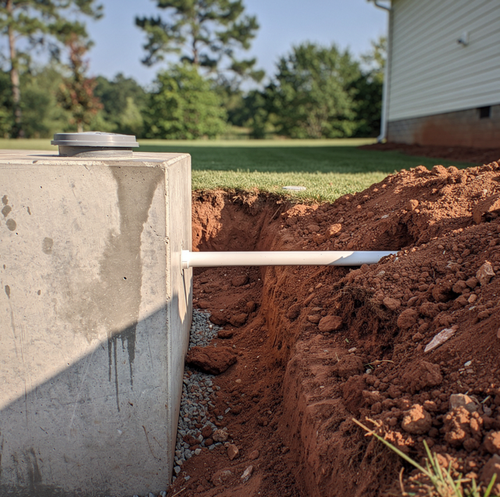
Quick Answer: A septic system treats wastewater in four stages: a buried tank separates solids from liquid, a small distribution box splits the clarified liquid (effluent) evenly, a drain field releases that effluent into the soil through perforated pipe, and the soil itself filters and treats it before it rejoins the groundwater. No electricity, pumps, or moving parts are required for a standard gravity system to run this cycle every single day.
A flushed toilet or a drained washing machine looks like the end of the story. It isn't. That water is about to spend anywhere from one to three days moving through a sequence of steps that most homeowners never see and rarely think about, right up until one of those steps stops working. Knowing what actually happens underground, in order, is the difference between calling for routine service and calling for an emergency.
The System Has One Job: Treat, Then Release
Every part of a conventional septic system exists to do one thing: take wastewater that is unsafe to release, hold it long enough for nature to start breaking it down, and then let the soil finish the job before the water rejoins the groundwater. There's no municipal treatment plant doing this work. It happens entirely on the property, using gravity, bacteria, and the absorptive capacity of ordinary dirt.
Stage One: The Tank Separates Solids From Liquid
Wastewater from every drain in the house- toilets, showers, sinks, and the washing machine- flows through a single pipe into a buried tank, usually precast concrete, though polyethylene and fiberglass tanks are common too. Sized mainly by the number of bedrooms in the house, most residential tanks hold somewhere in the 750 to 1,500-gallon range.
Inside the tank, physics does the sorting. Heavier solids sink to the bottom and form a layer called sludge. Fats, oils, and lighter material float to the top and form a layer called scum. In between sits a band of relatively clear liquid, effluent, and that's the only layer the system wants to move forward. A T-shaped pipe fitting called a baffle, set at both the inlet and outlet, keeps the scum layer from floating out and the sludge layer from getting stirred up and washed out with it.
Anaerobic bacteria, the kind that live without oxygen, work on the sludge and scum the entire time the tank is in service, breaking down a portion of it. They can't consume it all. Solids still accumulate year over year, which is exactly why pumping on a schedule, generally every three to five years depending on tank size and household size, matters more than almost anything else a homeowner does for the system.
Stage Two: A Distribution Box Splits The Flow
Once effluent clears the outlet baffle, it doesn't go straight into the yard. On most gravity-fed systems, it first enters a distribution box, a small chamber whose only function is to divide the incoming flow evenly among several outlet pipes, each one feeding a separate trench in the drain field. For that even split to work, the box has to sit level; a tilted box directs most of the flow to whichever outlet is lowest, overloading one trench while the others barely get used. Pressure-dosed systems skip the box entirely and use a pump and a manifold to deliver effluent under controlled pressure.
Stage Three: The Drain Field Releases Effluent Into The Soil
From the distribution box, effluent travels through perforated pipe laid in gravel-filled trenches, or in modern plastic chambers that create open voids without stone at all. The holes in that pipe let effluent seep out along the trench length rather than gushing from one point, so it soaks into the surrounding soil gradually instead of all at once.
This is where soil type decides how well the whole system performs. Sandy soil drains fast and forgives a lot. Clay-heavy soil has smaller pore spaces and drains slowly, so a field built in clay has far less margin when several inches of rain fall in a short window, or when a run of dry weather shrinks and cracks the ground around the trenches. Neither extreme breaks a properly sized field on its own; both simply shrink the cushion a marginal one has to work with.
Stage Four: Soil Finishes The Treatment
The soil beneath a drain field isn't just a drain; it's the actual treatment step. As effluent percolates downward, aerobic bacteria living in the oxygen-rich upper soil layer, a different population than the anaerobic bacteria back in the tank, break down remaining organic matter and pathogens. The soil particles themselves filter out fine solids the way a coffee filter's mesh traps grounds while letting brewed coffee pass through, useful right up until the mesh clogs. In a drain field, that clogging shows up as a biomat, a layer of solids and biological film that builds along the trench walls over years. A thin biomat is normal and even helps even out flow. A biomat that grows too thick stops accepting effluent altogether, and that trench is effectively retired from service.
By the time treated water reaches the groundwater below, it has passed through enough soil to remove the pathogens and organic material that made it unsafe to begin with. That's the entire point of routing effluent through soil rather than piping it away directly.
What Interrupts The Cycle
Every failure mode traces back to one of these four stages losing its margin. A tank that goes years past its pumping schedule lets sludge and scum build until there's no working space left for new wastewater, and solids start escaping into the distribution box and field where they were never meant to go. A distribution box that settles out of level or gets clogged with roots sends too much flow to one lateral and starves the rest. A drain field pushed past its absorption capacity, whether from age, an undersized design, or one section carrying more than its share, stops accepting water and pushes effluent back toward the tank or up to the surface instead.
None of these stages should ever be inspected by opening a tank or a buried box and looking inside yourself. Septic gas, hydrogen sulfide among it, can incapacitate a person in seconds, and a lid left ajar is a fall hazard on top of that. Surface signs- a soggy patch of lawn, a slow drain, a faint sulfur smell- are the safe way to read the system from the outside; diagnosing and opening it is licensed work.
Keeping The Whole Chain Working As Designed
Pump on schedule, not by symptom: Waiting for a warning sign means solids have already had years to build past the point pumping alone can undo. A schedule based on tank size and household count keeps the sludge and scum layers from ever eating into the working liquid space the tank needs.
Watch what goes down the drain: Grease, wipes, paper towels, and cooking oil don't break down the way toilet paper does, and they add to the solids load the tank and its bacteria have to manage. A garbage disposal, in particular, roughly doubles the solids reaching the tank compared to scraping food waste into the trash, according to manufacturer and extension-service estimates, which is one reason homes with a disposal often need more frequent pump-outs.
Keep the drain field's job in mind before you plant or park on it: Tree roots seek out the moisture around pipes and the distribution box, and vehicle or equipment weight compacts the soil the field depends on to stay porous. Both interfere with a system that works only because the ground above it remains undisturbed.
Have the system checked rather than guessed at: An inspection can trace the effluent level in the tank, check the distribution box for level and clear outlets, and evaluate whether the drain field is still absorbing at the rate it was designed for. That's the only way to know which of the four stages, if any, is running out of margin before it turns into a backup.
Frequently Asked Questions
Retention time in a properly sized tank generally runs one to three days, long enough for solids to settle and scum to rise before the clarified layer in between moves out through the baffle. A tank running near capacity from overdue pumping shortens that window considerably, since less empty space means less time for the separation to finish.
It's a T-shaped fitting on the inlet and outlet pipes that directs incoming wastewater downward below the surface and draws outgoing effluent from the middle liquid layer rather than the top. Without that submerged opening, floating scum would wash straight into the distribution box and drain field, clogging outlets and soil that were never built to handle solids.
Most modern tanks are two-compartment, with an internal wall splitting the tank into a larger first chamber, roughly two-thirds of the total volume, where the bulk of settling occurs, and a smaller second chamber that gives solids a final chance to drop out before the effluent exits. Older single-compartment tanks still exist on some properties and generally need more frequent pumping because they offer less settling volume overall.
Yes. Extension-service studies commonly cited by septic professionals estimate a garbage disposal can increase the solids load reaching the tank by 30 to 50 percent compared to scraping food waste into the trash, since ground food particles settle as sludge rather than breaking down as readily as toilet paper does. Homes with a disposal in regular use are often better off pumping on the shorter end of the recommended interval.
Gravel-and-pipe is the traditional design and works well where stone is affordable and easy to haul in. Plastic chamber systems create open voids without any gravel at all, which cuts material and labor costs on sites where stone delivery is expensive, or space is tight, and chambers can sometimes fit a larger effective drain-field area into a smaller footprint than an equivalent gravel trench.
Not typically. The bacteria populations go dormant when there's little new wastewater feeding them, rather than dying outright, and they generally recover their activity within days of normal water use resuming. The bigger risk during a long vacancy is usually a dry trap somewhere in the house letting sewer gas drift indoors, not any lasting damage to the tank's bacteria.
Have your system's tank, distribution box, and drain field evaluated together — a single inspection shows whether each stage is still working as designed. 3rd Generation Septic serves Lincoln, Pell City, and Talladega. Call (256) 330-6960.
