
Signs Your Septic System Needs Service Before It Fails
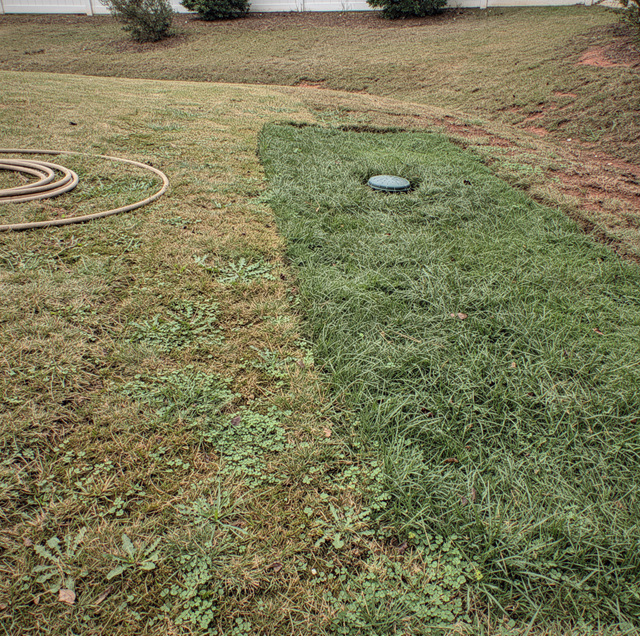
The bathtub takes an extra thirty seconds to drain after the kids get out, and nobody thinks twice about it. A faint, sulfur-like smell drifts up near the laundry room floor drain on humid mornings and fades by lunchtime. The patch of grass past the garden hose has stayed a little greener and a little spongier than the rest of the yard for weeks. None of these moments feels urgent. That is exactly the problem.
Your septic system rarely fails all at once. Long before a tank backs up into the house or a drain field stops absorbing water, it sends a string of small, easy-to-dismiss signals. Learning to read those signals, and understanding the mechanism behind each one, is what separates a routine service call from a weekend spent mopping up wastewater.
Why Symptoms Show Up Before Failure Does
A septic system is a closed loop: wastewater flows into the tank, solids separate into a floating scum layer and a settled sludge layer, and clarified effluent moves out through a baffle into the drain field, where soil bacteria finish treating it before it filters down toward the groundwater. Every warning sign below traces back to one part of that loop losing its margin for error, whether that is a tank nearing capacity, a clogged filter, or soil that can no longer keep pace with the water arriving above it.
A Faint Sewage Odor Indoors or Near the Yard Signals Escaped Gas
Inside the house: Septic gas is supposed to travel up through the home's vent stack and release above the roofline, not seep back through drains. If a sink or floor drain is used infrequently, the water in its trap can evaporate, leaving nothing to block gas from drifting into the room. A quick fix there is simply running water through the drain. If the smell persists after that, it can indicate a failing wax ring, a cracked vent pipe, or a tank baffle that is no longer sealing off gas as it should.
Outside near the tank or drain field: A sour, eggy odor hanging low over the yard, especially after rain or on still, humid days, often means gas or effluent is reaching the surface instead of staying contained underground. It has a heavier, closer smell than typical yard odors, more like standing water than fresh-cut grass, and it tends to settle in one consistent spot rather than drift.
A Slow or Gurgling Drain Points to a Building Blockage
Water that swirls, hesitates, or gurgles as it drains is fighting resistance somewhere in the line. If it is happening at a single fixture, the clog is likely local, hair, grease, or a bent trap. If multiple fixtures across the house are slow at the same time, especially the lowest ones like a basement sink or shower, the resistance is more likely downstream, at the effluent filter mounted in the outlet baffle or in the pipe run toward the tank itself. That filter is designed to catch fine solids before they reach the drain field, and a filter that is loading up will first show as slow drainage, then as gurgling, then as a backup.
Soggy, Spongy, or Unusually Green Grass Over the Field Means Effluent Isn't Absorbing
The drain field releases treated effluent through perforated pipe laid over gravel trenches, where it should soak into the surrounding soil at a steady rate. In clay-heavy soil, the pore spaces between particles are naturally smaller and slower to drain, so a field already working near its limit has little cushion left when a few inches of rain fall in a short window. Grass roots reach for that extra moisture and nutrients, which is why the ground above a stressed field often looks lush and spongy compared to the rest of the lawn, almost like walking on a saturated sponge instead of solid turf, even on days when nothing nearby has been watered.
Gurgling, Bubbling, or Standing Water Near the Tank Lid Signals the Tank Itself Is Full
Sludge settles at the bottom of the tank, and scum floats at the top; the space between these two layers is where the wastewater is actually treated and held long enough to work. As sludge and scum build up over years of normal use, the working space shrinks, reducing the retention time the effluent needs before it moves on to the distribution box, which routes it evenly to the drain field lines. Once that margin disappears, wastewater can back up toward the inlet, surface near the lid or riser, or flow unevenly through the distribution box and overload one section of the field before the others.
| Symptom | Likely Cause | Recommended Action |
|---|---|---|
| Faint sewage smell indoors | Dry drain trap, failing seal, or vent issue | Run water through the drain; call for inspection if smell continues |
| Sewage odor near the yard | Gas or effluent surfacing near tank or field | Schedule a septic inspection |
| Slow drains at one fixture | Local clog in that fixture's line | Clear the fixture trap or line |
| Slow drains at multiple fixtures | Effluent filter loading up, or line blockage near the tank | Schedule tank service and filter check |
| Soggy or bright green grass over the field | Drain field losing absorption capacity | Schedule a drain field evaluation |
| Gurgling or standing water near the tank lid | Tank nearing capacity, sludge and scum layers too thick | Schedule a pump-out |
Waiting Turns an Easy Fix Into a Larger Repair
Each of the signs above shares a mechanism: something in your system has less margin than it used to, whether that is retention time in the tank, filtering capacity in the field, or clear passage through the pipes. Left alone, a full tank keeps filling, a struggling field keeps absorbing less, and a clogged filter keeps building pressure, until the system runs out of margin entirely. What starts as a slow drain or a damp patch of grass can become sewage backing up into the house or effluent surfacing across the yard, which is harder on the household and on the system itself. Since pump-outs are typically recommended every three to five years depending on household size, most early symptoms show up between scheduled services, which is exactly when they matter most to catch. Consistent care also protects the groundwater the system was designed to safeguard in the first place, since a struggling drain field can send effluent toward it before treatment is complete.
Frequently Asked Questions
There is no fixed timeline, but a partial blockage from a loading effluent filter or a narrowing pipe typically worsens over days to a couple of weeks as more solids collect on top of the existing buildup, rather than clearing on its own.
Yes. Systems with a pump chamber or aerobic treatment unit use a float switch and alarm to flag high water levels, and that alarm can also trip from a failed pump, a stuck float, or a tripped breaker rather than the tank actually being full.
Not necessarily. A P-trap can run dry in as little as two to three weeks in a guest bathroom or basement floor drain that never gets used, and pouring a cup of cooking oil on top of the water after refilling the trap slows future evaporation because oil doesn't evaporate the way water does. That single trick resolves a surprising share of indoor odor calls without any tank work at all.
A technician can often tell the two apart in one visit: popping the tank's inspection riser and checking the effluent level against the outlet pipe shows whether wastewater is backing up inside the tank itself, while a dye test flushed down a toilet and tracked to where it surfaces in the yard confirms whether the field is the one struggling to absorb. The two problems call for different fixes, so this quick check keeps a service call from turning into guesswork.
Running several large loads back-to-back sends a surge of water through the system in a short window, which can temporarily overwhelm a drain field's absorption rate in clay-heavy soil, even when the system is otherwise healthy. Spacing loads out over the week reduces that strain.
The effluent filter sits in the outlet baffle and needs periodic cleaning on its own schedule, separate from a full pump-out, because a clogged filter can cause slow drains or an alarm even when the tank still has plenty of working capacity.
Most of these signs are quiet on purpose. Your septic system is built to work underground and out of sight, so a faint smell, a slower drain, or a damp patch of lawn is often the only signal it gives before asking for more attention. Paying attention to those small cues and having them checked while they are still small keeps a routine service call from turning into a weekend emergency.
Schedule a septic inspection — before a slow drain or soggy yard turns into a backed-up system. 3rd Generation Septic serves Lincoln, Pell City, and Talladega. Call (256) 330-6960.
