
What a Real-Estate Septic Inspection Involves (And Why)
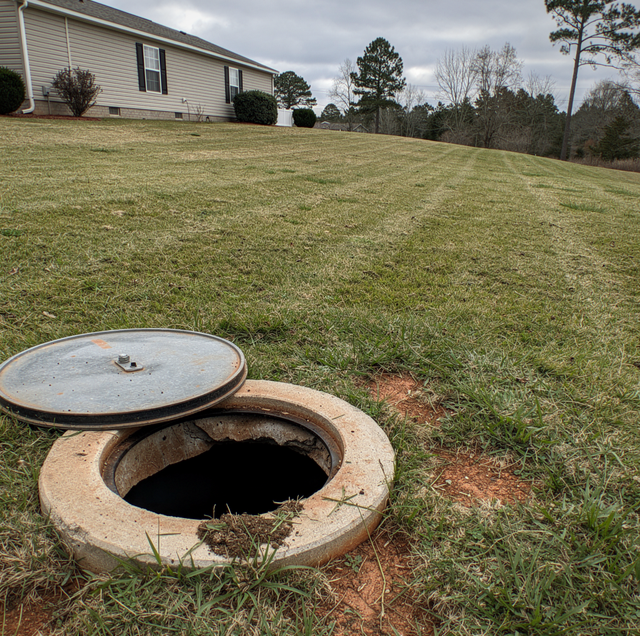
A home sale runs on deadlines, and a septic system does not care about any of them. It sits underground, out of sight of a walkthrough, and it can carry problems that never show up until a new owner has already moved boxes into the house. That gap between what a buyer can see and what the property actually has is exactly what a real-estate septic inspection is built to close. It is not the same visit as a routine service call, and understanding what it actually covers and what a bad result really means for the deal changes how you plan the whole transaction.
Why a Sale Changes What Gets Inspected
A septic system that has quietly served one household for years can look fine to the people living with it. They know which drain runs slow, they have learned not to flush certain things, and none of it registers as a problem because it has become normal. A buyer inherits none of that context. Whatever is wrong with the system on closing day becomes theirs to fix, often before they have a full year of ownership under their belt, so a sale is the one point at which an outside, disinterested set of eyes has a real financial reason to look closely.
That is why a real-estate inspection tends to go deeper than an inspection requested by an owner who is simply curious. The buyer's side wants documentation that will hold up in a later dispute. The seller's side often wants the same report as proof that the system was sound at the time of sale, and as protection against a claim showing up months afterward. Both parties benefit from a thorough look, even though they are on opposite sides of the negotiation.
What the Inspector Actually Checks
A real-estate inspection walks the full path water takes through the system, not just a glance at the tank lid.
Tank condition: The inspector opens the tank and examines the walls, floor, and lid for cracks, corrosion, and any spots where groundwater might be entering or wastewater might be exiting. A tank losing structural integrity is one of the costlier findings in a sale, since replacement rather than repair is often the only real fix.
Effluent levels: The liquid inside the tank is measured against where it should sit relative to the outlet pipe. Water sitting too high suggests something downstream is not accepting flow as it should; water sitting unusually low can indicate a leak. Either reading reframes everything else the inspector finds.
Baffles: At the inlet and outlet, these fittings keep floating scum and settled solids from washing straight into the drain field. A missing or broken baffle is a common finding in an older system and one of the cheaper problems on this list to correct, but an inspector who skips checking for one has skipped a meaningful part of the job.
The distribution box: This buried fitting splits the outgoing flow evenly among the drain field's lines. A distribution box that has tilted, cracked, or filled with silt sends all the load down one line while the rest sit unused, aging part of the field years ahead of the rest.
The drain field: Since the field can't be opened and examined directly, the inspector reads it from the surface, looking for standing water, unusually lush or spongy patches of ground, and any odor that suggests effluent is surfacing rather than soaking into the soil. Many real-estate inspections add a flow test, running water through the system to see how the tank and field respond under a realistic load rather than judging everything from a single still snapshot.
Each of these findings matters less on its own than in combination. A tank with clean internals but a field that stays wet after a flow test tells a very different story than a tank nearing capacity sitting above an otherwise healthy field, even though both might get summarized in a report as "needs attention."
How This Differs From a Routine Pump-Out
It's easy to assume a recent pump-out means the system has already been checked, but pumping and inspecting answer two different questions. A pump-out empties the tank of accumulated solids and resets the amount of working space left inside it. It doesn't evaluate whether the baffles are intact, whether the distribution box is dividing the flow correctly, or whether the drain field still absorbs water as it did when it was installed.
A real-estate inspection is built around the opposite priority. Rather than servicing the tank, it produces a snapshot of the entire system's condition at one point in time, one that a lender, a buyer's agent, or an attorney can rely on. A system can be freshly pumped and still fail a real-estate inspection if the field is saturated or the distribution box has tipped, and a system overdue for pumping can still pass if every component beyond the tank is sound and the layers need to be emptied before closing. Conflating the two is one of the more common misunderstandings in a home sale, and it's worth clarifying with whoever is coordinating the transaction which service is actually being ordered.
Who Orders It and Who Pays
Convention on this varies more than most buyers expect. In many transactions, the buyer arranges and pays for the inspection as part of due diligence, just as they would order a home inspection or a well test. In others, a seller gets ahead of the process by having the system inspected before listing, using a clean report as a selling point and avoiding a surprise mid-negotiation. Some contracts split the cost or leave it to whichever party's financing requires it, since certain loan types condition approval on a septic evaluation meeting written standards.
Whoever pays, it's worth confirming in writing which party receives the original report and how quickly it needs to happen, because the answer usually determines how much room each side has to negotiate if the findings come back unfavorable.
What a Failed Inspection Means for the Sale
A failing report rarely ends a deal outright, but it does reshape it. The most common outcomes fall into a few patterns:
Repair before closing: If the issue is a cracked baffle, a tank nearing capacity, or a clogged filter, the seller may agree to have it corrected and re-inspected before the sale is finalized. This keeps the closing date close to the original timeline.
Price or credit negotiation: For a larger issue, such as a failing drain field, the two sides often negotiate a price reduction or a credit at closing rather than a full repair before the transaction proceeds, especially when the fix would take longer than the contract's timeline allows.
Extended timeline: Some findings, particularly anything requiring permits or a field replacement, simply take longer than a standard closing window. Buyers and sellers sometimes agree to extend the contract or hold funds in escrow until the work is finished and verified.
Walking away: When a contract includes an inspection contingency, a severe enough finding- one where the cost or scope of repair changes the deal's economics- gives either side grounds to exit without penalty. This is the scenario the whole inspection exists to prevent from happening after the sale rather than before it.
What makes a finding "severe" isn't fixed; it depends on the specific system, the property's other conditions, and what the contract's contingency language actually allows. That's exactly why a written report with real measurements, not a one-line pass or fail, matters so much at this stage. It gives both sides something concrete to negotiate around instead of a vague impression.
Timing It Inside the Contract
Most purchase contracts build in a defined inspection period, often a window of a couple of weeks, during which the buyer can order and review a septic inspection alongside the general home inspection. Scheduling it early in that window matters more than it seems, since a flow test and a full field evaluation take longer than a quick look at the tank, and a finding that requires further evaluation- uncovering the tank fully, tracing the field's exact layout- can eat into days the contingency period doesn't have to spare.
Sellers who know their system's history well can shorten this process considerably by having records ready: the last pump-out date, any prior repairs, and, if known, the system's general age. An inspector working with that context can move faster than one starting from nothing, and a seller with nothing to hide benefits from making that history easy to find.
Preparing the Property Beforehand
A few simple steps keep the inspection day from running long or producing an inconclusive result. Clear access to the tank lid and any risers, whether that means moving stored items, cutting back overgrowth, or simply knowing where the tank sits on the property, since a system whose location has to be located from scratch adds real time to the visit. Avoid a fresh pump-out right before the inspection; emptied layers hide the evidence an inspector actually needs to judge how the tank has been performing. And keep water use close to normal in the days leading up to the visit rather than either flooding the system or letting it sit unused, since either extreme can distort what a flow test shows.
None of this changes what the inspector finds, but it does change how cleanly the process runs and how much of the contingency window is used up on logistics rather than the evaluation itself.
Frequently Asked Questions
Requirements vary by lender and by the specific loan program rather than by a single blanket rule. Certain government-backed mortgage programs require that a septic evaluation meet minimum standards, while a cash purchase might not require one at all unless the buyer's contract makes it a condition. Checking with the loan officer or closing attorney early tells you whether it's mandatory for that particular deal.
A home warranty or insurance-related septic evaluation is usually narrower, checking mainly whether the tank and major components are functioning at the time of the visit so a claim can be processed later. A real-estate inspection is broader by design, since it has to account for how the system will hold up under a new owner's water use patterns, not just whether it's working on the day someone looks at it.
Yes, a single report can serve both sides as long as it's dated, detailed, and produced close enough to closing that neither party questions whether conditions changed in between. Some contracts specify a maximum age for the report, often 90 days or less, precisely so an outdated inspection can't be used to paper over a problem that developed afterward.
An inspector without accurate records has to probe the yard to find the tank, which adds time and, on a large or overgrown lot, sometimes an extra visit. If county or health department permit records exist for the property, those often include a site sketch that speeds this up considerably. Hence, it's worth asking whoever holds those records to pull the file before the inspection is scheduled.
A standard septic inspection stops at the septic system itself, but many real-estate transactions pair it with a separate well-water test, especially when the two sit close together on the property. Groundwater contamination risk rises when a failing field is near a water source, which is exactly why these two checks are often bundled into the same visit even though they're technically separate evaluations.
A pre-listing inspection can speed up negotiations, but a buyer's lender or agent will often still require a report ordered by the buyer's own chosen inspector, particularly if financing is involved. Treat a seller's report as useful background rather than a substitute; it reflects the system's condition at listing, not necessarily at the moment the buyer's contingency period begins.
Schedule a real-estate septic inspection — get a full report on tank condition, the drain field, and the distribution box before your closing date. 3rd Generation Septic serves Lincoln, Pell City, and Talladega. Call (256) 330-6960.
