
What Causes Septic Odors Inside the Home: 5 Common Sources
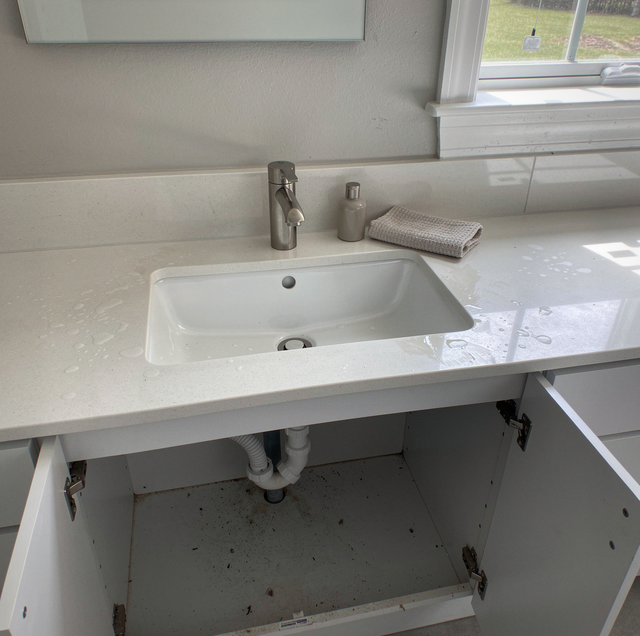
A sewage smell inside the house rarely means the same thing twice. Sometimes it fades the moment you run water through a drain. Sometimes it lingers no matter what you try, and it means a part of the plumbing or the septic system itself has stopped doing its one job: keeping sewer gas on the other side of a seal. Figuring out which situation you're in starts with paying attention to where the smell shows up and whether it comes and goes.
Why Sewer Gas Gets Into A House At All
Every fixture- sinks, tubs, toilets, floor drains, and the washing machine standpipe- relies on a trapped section of water sitting in the pipe between that fixture and the sewer line. That standing water is the seal. As long as it's there, gas traveling through the pipes has nowhere to go but up through the home's vent stack, above the roofline, where it disperses outdoors. The moment a seal fails, whether the water evaporates, a fitting cracks, or a connection loosens, gas finds the shortest path back into the living space instead. Nearly every indoor odor complaint comes down to identifying which seal failed.
A Dry Trap Is the Single Most Common Cause
Every drain that connects to a trap depends on water sitting in that curved section of pipe to block gas. A fixture used daily keeps that water topped off automatically. A fixture that sits idle- a guest bathroom, a basement floor drain, a laundry sink nobody visits- doesn't. Water evaporates out of an unused trap in as little as two to three weeks, and once it's gone, gas drifts straight up through the drain opening and into the room.
This is also the easiest cause to rule out. Running water through the fixture for several seconds refills the trap, and if the smell disappears afterward, the mystery is solved. Pouring a small amount of cooking oil on top of the refilled water slows future evaporation, since oil doesn't evaporate the way water does, and it can keep an infrequently used trap sealed for months longer between uses. Floor drains in basements and utility rooms are worth checking on this basis alone, since they're often the first trap to run dry and the last one anyone thinks to check.
A Failed Wax Ring Lets Gas Escape Around the Toilet Base
A toilet sits on a wax ring, a soft seal that closes the gap between the fixture base and the drain pipe below the floor. That ring keeps water from leaking during a flush and keeps gas from rising around the base between flushes. Wax rings degrade with age and can also fail early if a toilet was ever rocked loose, reset without a fresh ring, or set on an uneven floor flange that never let the seal compress evenly.
A failing wax ring produces a smell concentrated right at floor level around the toilet base, often stronger when kneeling near it than standing. A rocking or unstable toilet is a strong clue, since a loose fixture is usually what broke the seal in the first place. Sometimes there's also a faint water stain on the ceiling below if the toilet is on an upper floor, a sign that the ring failed on the water side, too. This is squarely a plumbing repair rather than a septic system issue, one a licensed plumber typically resolves in a single visit by resetting the toilet on a new ring.
A Cracked Vent Stack Changes How Gas Moves Through the Whole House
The vent stack carries sewer gas up and out above the roofline and also lets air into the drain system, so water flows out of traps smoothly rather than pulling the seal along. A crack or loose joint anywhere along that stack, whether from age, an attic pest, or storm damage to the roof penetration, changes the pressure inside the whole drain system rather than affecting just one fixture.
The tell is a smell that shows up in more than one room, particularly upper floors near where the vent runs through the attic, and gets worse on windy days as air moves oddly through a broken vent. Gurgling across multiple fixtures during normal use, an audible gurgle as air struggles to enter the system properly, often accompanies a vent problem. Because the stack runs through the attic and roof, tracing it typically requires a plumber who can inspect it directly rather than a guess from ground level.
A Full or Struggling Septic Tank Pushes Gas Back Through the House
Each of the causes above involves a broken seal somewhere in the home's plumbing. This one is different: the tank itself no longer has room to hold gas and wastewater the way it was designed to. As sludge and scum build up over years between pump-outs, the working space inside the tank shrinks, and pressure has fewer places to go. Rather than venting harmlessly through the tank's own vents, gas gets pushed back up through the pipes toward the house.
The difference from a dry trap or a bad wax ring shows up in the pattern rather than the location. A trap or wax ring problem is usually steady and traceable to one fixture. A tank-related odor tends to be inconsistent, stronger after heavy household water use or a stretch of rain, and it's frequently accompanied by other signals: slow drains at multiple fixtures, gurgling near the lowest drain in the house, or a soggy patch developing outdoors near the tank or drain field. A tank running past its pumping schedule is the most common driver, since pumping every three to five years, depending on household size, keeps that working space from disappearing.
A Damaged Sewer Line Connection Lets Gas Escape Underground and Indoors Both
The pipe connecting the house to the tank can crack, separate at a joint, or get compromised by root intrusion. A break anywhere along that run lets gas escape both outdoors, where it smells near the pipe's path, and indoors, where it rises back up through the nearest low fixture, commonly a basement floor drain or laundry standpipe. This cause often gets mistaken for a dry trap, since the smell can concentrate at one drain, but running water through that drain doesn't resolve it the way an actual dry trap does.
A sewer line issue is worth suspecting when an odor keeps returning to the same fixture despite a fresh trap seal, especially if paired with a slow drain there or with a stretch of ground outdoors along the pipe's likely path that stays damp or grows unusually thick grass. This repair requires the actual line to be inspected, since a cracked or separated pipe won't resolve on its own and tends to worsen as more wastewater passes through the break.
How to Tell a Single-Fixture Problem From a Whole-House Problem
The clearest diagnostic question is: does the smell follow a specific drain, or does it appear in multiple rooms regardless of which fixtures are in use? A smell tied to a single toilet or floor drain almost always points to a local seal, a dry trap, or a failed wax ring at that fixture. A smell that shifts between rooms, gets worse after heavy water use, or shows up alongside slow or gurgling drains at more than one fixture points further downstream, toward the vent stack, the tank, or the connecting line.
Timing matters too. An odor that comes and goes with how recently a fixture was used usually traces back to evaporation and a dry trap. An odor that correlates with laundry days, guests staying over, or a stretch of rain points toward a system running low on capacity rather than a simple seal failure.
Simple Checks Before Calling for Service
A few checks take only minutes and rule out the easiest causes first. Run water through every drain in the house that isn't used daily, including basement floor drains, guest bathroom sinks, and laundry room floor drains, and note whether any smell fades afterward. Check whether the toilet closest to the smell rocks or shifts when pressed near the base, since movement there points toward a failed ring. Look outdoors near the tank and drain field for a damp patch, unusually green grass, or a faint odor that wasn't there before, since any of those alongside an indoor smell shifts the likely cause toward the tank or the line rather than a single fixture.
If none of those checks yield an answer, or the smell appears in multiple rooms rather than one, the next step is a proper inspection rather than more guessing. A technician can check the tank's fill level against where it should sit, look for signs the drain field is losing absorption capacity, and trace a stubborn odor back to whichever part of the system has actually lost its seal.
When It's a Simple Fix Versus a Bigger System Issue
Most indoor odor problems traced to a single dry trap or failed wax ring resolve with a quick fix, refilling a trap or resetting a toilet, and don't reflect anything wrong with the septic system underground. A cracked vent stack sits in between: it's a plumbing repair, but one that needs a professional to access and fix properly.
An odor caused by a tank running past its pumping schedule, or by a damaged line between the house and the tank, is a different category. Both point to the system itself needing attention rather than a seal that dried out or wore down, and both tend to worsen the longer they go unaddressed, since a tank already low on working space keeps filling. A compromised line keeps letting more wastewater escape at the break. Treating those as a one-time fix instead of scheduling an inspection usually just delays a bigger repair.
Frequently Asked Questions
An intermittent smell usually points to something that changes with use, like a trap slowly drying out between uses or a tank's fill level rising after heavy water use and settling back down afterward. A constant smell more often points to a fixed break, such as a cracked vent or a compromised line, that doesn't depend on how much water is running through the system.
No. Masking the smell doesn't address a dry trap, a failed seal, or a tank running low on capacity, and the underlying cause keeps developing while it's covered up. Tracing the actual source, even with a simple check like running water through an unused drain, resolves far more than any air freshener will.
Low-level exposure from an occasional whiff is generally more unpleasant than hazardous, but sewer gas contains hydrogen sulfide, which can cause headaches or nausea with sustained exposure and becomes dangerous at high concentrations. A persistent, strong indoor odor is worth addressing quickly rather than living with it, for both comfort and safety.
New construction can absolutely have odor issues, usually from an improperly sealed wax ring during installation, a vent connection that wasn't fully secured, or a trap that simply hasn't seen regular use yet if a room sits unfinished or unoccupied. Age increases the odds of a worn seal, but it isn't a requirement for any of these causes.
Not necessarily. A smell isolated to one fixture, especially one that resolves after running water or checking the toilet's seal, is usually a local plumbing issue rather than a sign the tank or drain field needs attention. A whole-system check becomes more relevant once the smell spreads to multiple rooms or shows up alongside slow drains, gurgling, or outdoor signs near the tank and field.
Running water through rarely used drains, guest bathrooms, basement floor drains, and laundry sinks, roughly once a month, keeps traps from drying out before they become an odor problem. Homes with rooms that sit empty for extended stretches benefit from checking those drains right before and after the vacancy, since that's when evaporation has the most time to work.
Schedule a septic inspection — get the actual source of a stubborn indoor odor traced and fixed, rather than guessed at. 3rd Generation Septic serves Lincoln, Pell City, and Talladega. Call (256) 330-6960.
