
Why Are My Drains Slow Throughout the House? The Real Cause
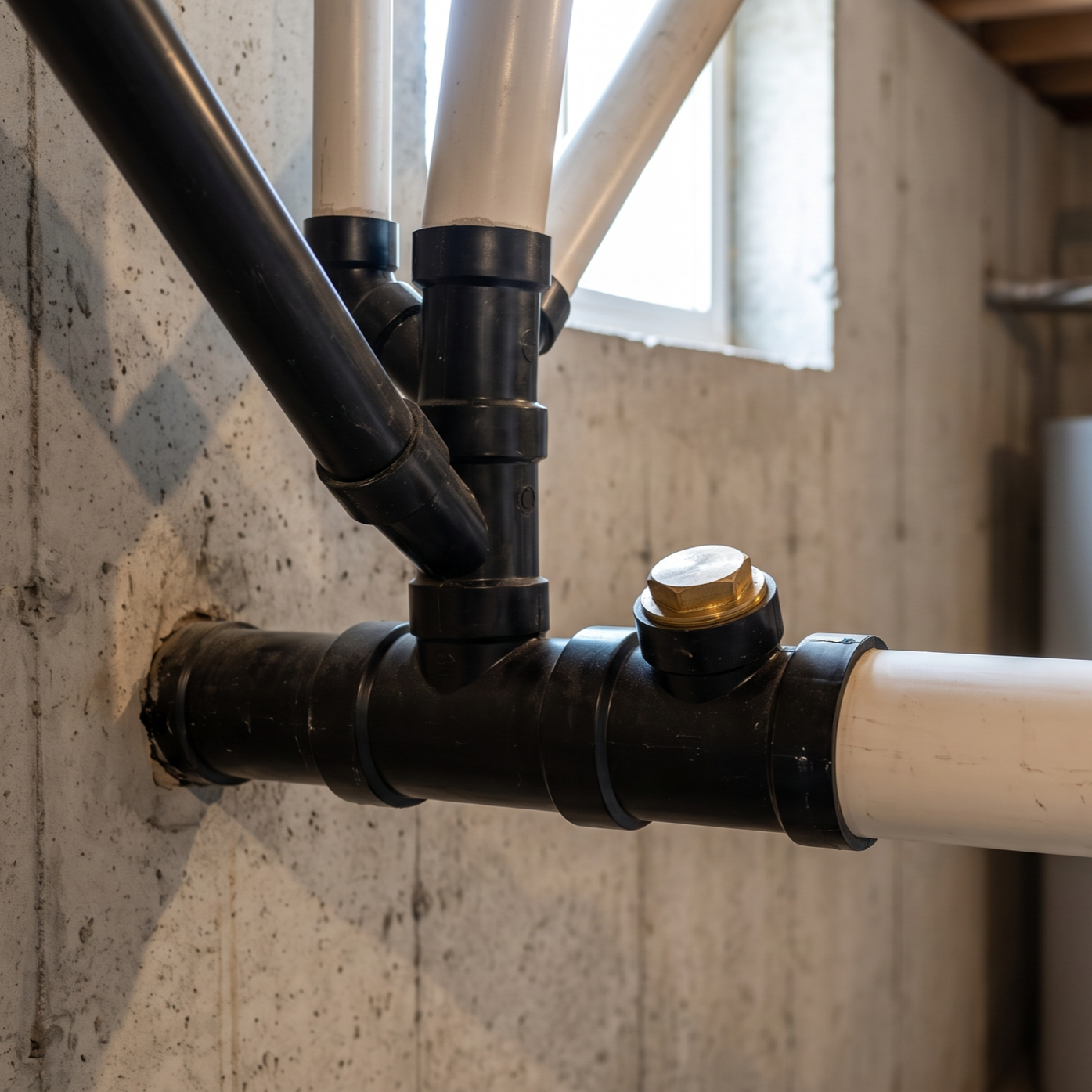
One slow sink is annoying. Every sink, tub, and toilet in the house that is draining sluggishly at the same time is a different animal, and they point to different places. When the problem shows up at a single fixture, the trouble is almost always local: a wad of hair, grease, or soap in that one trap or branch line. When the whole house slows down together, the fixtures themselves are fine. The trouble sits downstream of all of them, in the main line that carries everything to the tank or in the septic system itself. Understanding that difference is the fastest way to stop treating the wrong problem, so this article walks through why it happens before it gets to what to do about it.
One Fixture Versus the Whole House
Think of your home's drains like the branches of a tree feeding into one trunk. Each fixture, the kitchen sink, each bathroom, and the laundry has its own small branch line. All of those branches join a single larger pipe, the main sewer line, which runs out to the septic tank. From the tank, the liquid flows to the drain field, where it soaks into the soil.
If one branch is blocked, only the fixture on that branch backs up. The rest of the house drains normally because its branches are clear and the trunk is open. But if the trunk itself, the main line, or anything past it is restricted, every branch upstream feels it at once. Water still runs down the pipe, just slowly, because the outlet it is all trying to reach is choked. That is why whole-house slowness is a downstream signal. The fixtures are not the patient; the main line and the septic system are.
What Goes Wrong Downstream on a Septic Home
Once you know the problem is downstream, a handful of causes account for most cases on a septic property. They tend to overlap, and more than one can be in play at the same time.
A full septic tank: Inside the tank, solids settle to the bottom as sludge, and greasy material floats to the surface as scum, leaving a clarified middle layer that flows to the drain field. When those layers grow tall enough that the tank runs out of working room, it can no longer accept new flow cleanly. Wastewater has nowhere to go, so it backs up into the main line and every fixture drains slowly until the tank is pumped.
A clogged outlet baffle or effluent filter: The tank's outlet has a baffle, and many systems add a screened filter there, both meant to keep solids from escaping to the drain field. When that filter loads up with debris, it does its job too well and chokes the outflow. The tank fills, the main line backs up, and the whole house slows even though the tank may not be truly full.
A blockage in the main line: The pipe running from the house to the tank can be obstructed by grease buildup, a collapsed or bellied section, or tree and shrub roots that have found a joint and grown into the flow. Roots are patient and relentless; a fine root can slip into a hairline gap and thicken into a mat that catches paper and solids.
A saturated or failing drain field: This is the far end of the system, where effluent is supposed to soak into the soil. If the field can no longer accept liquid, effluent has nowhere to drain, the tank stays full, and the backup marches all the way up to your fixtures. Fields fail due to years of solids clogging the soil pores, aging, or a high-water table around the trenches. Heavy rain makes it worse for a while, and dense clay soil drains slowly to begin with, so the ground stays saturated longer after a storm.
A blocked vent stack: The vent pipe running up through your roof lets air into the drain system so water can flow smoothly instead of glugging against a vacuum. If a bird nest, leaves, or ice blocks the vent, drains all over the house, running slowly and gurgling even when the pipes below are clear. It is the least common cause here, but it is the one that most closely mimics a septic problem.
The Tells That Point at the Septic System
A few signs, taken together, separate a septic or main-line problem from an ordinary clog. No single one is proof, but the more of them you see at once, the stronger the case.
- Everything slows together: Multiple fixtures across different rooms turning sluggish at the same time is the headline symptom.
- Gurgling: Air struggling past a partial blockage makes toilets bubble and drains glug as they empty.
- Backups start at the lowest drains: A basement floor drain, a first-floor shower, or the lowest toilet backs up first because wastewater seeks the lowest exit when it cannot get out.
- Smell and signs in the yard: A sewage odor near the tank or drain field, soggy ground, or a stripe of unusually lush green grass over the tank or field all suggest that effluent is surfacing rather than soaking away.
When the slowness is confined to one fixture with no gurgling and nothing happening in the yard, you are almost certainly looking at a local clog on that branch. When the list above starts filling in, the trouble is downstream, and the septic system deserves a look.
Why Heavy Rain and Clay Soil Cut Both Ways
Weather earns its own mention because it works in more than one direction. A drain field relies on the surrounding soil having sufficient capacity to absorb water. After a long, heavy rain, the ground can already be saturated, so effluent has nowhere to soak, and the system backs up temporarily until the water table drops. Dense clay soil, common in many regions, holds water and drains slowly, which prolongs recovery.
But rain is not the whole story, and framing it as the only cause would be a mistake. A field that only struggles after a storm is often a field already near its limit from years of use or overdue pumping; the rain exposes what was coming anyway. Fields fail in dry spells, too, from solids that clog the soil long before any storm. So treat heavy weather as one stressor that reveals a weak system, not as a seasonal excuse that clears up on its own for good.
What to Do First, and What to Avoid
You cannot fix a main-line or septic problem from inside the house, but a few early moves protect the system and help whoever services it.
First, confirm what you are dealing with. Check whether the slowness is truly house-wide or just one fixture. Run water at a sink far from the one that seems slow and watch a couple of other drains. Whole-house slowness sends you toward the main line and tank; a single stubborn drain is a local job.
Second, ease off on water use. Hold back on laundry, long showers, and the dishwasher while things are slow. Every gallon you send down adds to a system that already cannot keep up, and backing off buys room until the tank can be checked.
Third, skip the drain chemicals. They cannot clear a main-line obstruction or a full tank, and on a septic home, they do real harm by killing the bacteria the tank depends on. More on that in the questions below.
Fourth, get the tank checked, and if it is due, pumped, with the effluent filter cleaned at the same time. A pump-out empties the tank so it can accept flow again, and clearing the filter restores outflow to the field. Both are quick wins a professional can handle in one visit.
One firm safety line runs under all of this: never open and enter a septic tank yourself. The gases inside, including hydrogen sulfide and methane, can overwhelm a person in seconds and have killed homeowners who climbed in to look. Septic diagnosis and repair is a jobs for trained crews with the right equipment. Your role is to notice the symptoms early and make the call.
Frequently Asked Questions
A septic pro confirms it by opening the tank lid and measuring the sludge and scum layers with a probe. A tank about to back up shows the scum crowding the outlet baffle, which tells the tech the system, not a fixture, is the problem. A single-fixture clog is a different job: it gets cleared by snaking that one branch line, no tank work needed. So the split between the two is a measurement, not a guess.
Yes, though the word full is misleading. A working tank is always full of liquid right up to the outlet; that is normal. The trouble starts when solids and scum build up to the level of the baffle and begin carrying over into the outflow. That solid buildup is what a pump-out actually removes, not the liquid, which is why pumping restores the room the tank needs and clears the house-wide slowdown.
Many septic tanks have a screened filter fitted on the outlet pipe whose job is to catch solids so they never reach the drain field. It protects the field, but it also clogs over time as it collects debris. A clogged filter chokes the flow leaving the tank, backing up the system, and slowing the whole house. Cleaning or replacing that filter is a common, quick fix that people often overlook.
A rain-driven slowdown eases once the ground dries, because a saturated drain field simply needs the water table to drop before it can absorb effluent again. Here is a useful test: if the drains are also slow in dry weather, suspect root intrusion at the pipe joints or a collapsed line rather than the field. Roots and broken pipes do not care about rain, so a problem that never lets up between storms points away from the field and toward the line itself.
On a septic system, yes. Harsh drain cleaners cannot clear a main-line obstruction, a full tank, or a saturated field, so they do nothing for the actual problem. Worse, the caustic ingredients kill the beneficial bacteria in the tank that break solids down. Knock that colony back, and solids accumulate faster, leaving the system working less well than before you poured anything in.
Most tanks need pumping every few years, with the exact interval depending on tank size and how much your household puts through it. A small tank serving a full, busy home fills faster than a large tank serving two people. Stretching well past that window is one of the leading reasons solids build up, escape toward the drain field, and slow the whole house, so a routine pump-out is the cheapest insurance against a house-wide backup.
Book a septic inspection or pump-out — catch a whole-house backup before it reaches your fixtures. 3rd Generation Septic serves Lincoln, Pell City, Talladega. Call (256) 330-6960.
